2025: A Pivotal Year for Crypto Derivatives Markets and Risk Management
2025 proved to be a transformative year for the cryptocurrency derivatives market, revealing critical vulnerabilities amid record liquidations. With significant implications for risk management, this watershed moment is reshaping strategies and regulatory perspectives in digital asset trading.
Written by CoinArticle’s AI Newsroom · from 1 cited source. How we work
A Watershed Year for Derivatives Markets
The cryptocurrency derivatives market encountered unprecedented turbulence in 2025, revealing systemic vulnerabilities that had long been dismissed as mere theoretical concerns. This year marked a decisive shift in how market participants, regulators, and institutional observers perceive risk management in digital asset futures trading.
Record Liquidations Expose Market Fragility
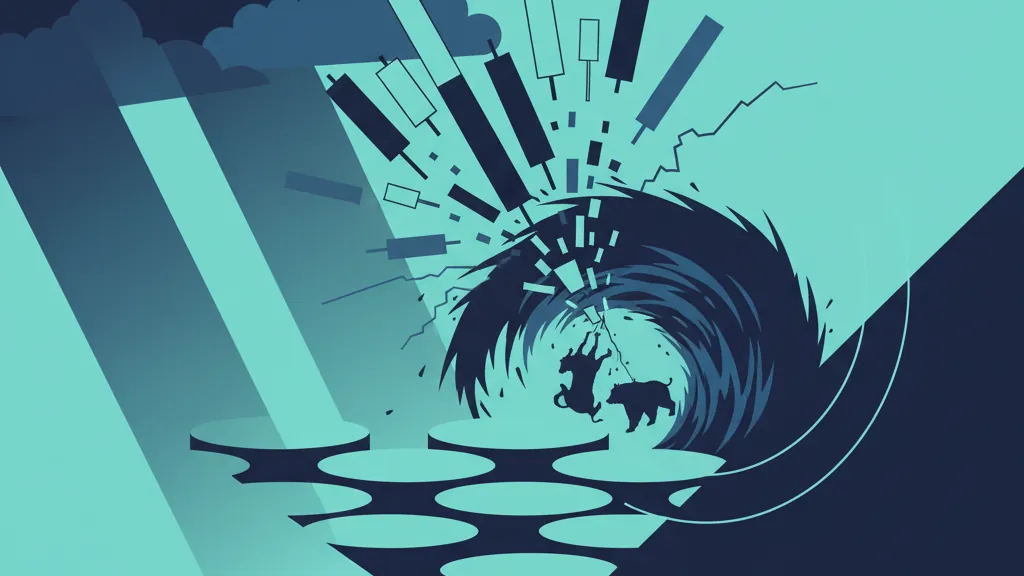
By the end of 2025, perpetual futures markets across major exchanges recorded over $154 billion in forced liquidations—a staggering figure that highlights the extent to which leverage had infiltrated trading strategies. These forced position closures, triggered when traders' collateral was insufficient to maintain their positions, underscored the cascading effects of volatility within an interconnected market structure.
This scale of liquidations was emblematic of more than just individual trading losses; it revealed significant structural weaknesses in how participants approached risk in crypto futures markets. What had previously been mere academic discussions about potential systemic risk materialized into quantifiable market disruption throughout the year.
From Theory to Reality
The transition from theoretical risk models to actual systemic failure marked 2025 as a critical inflection point for the industry. Market observers noted that the warning signs had been evident for years, yet the confluence of increased leverage availability, heightened retail participation in complex derivatives, and periods of extreme volatility created conditions under which hypothetical scenarios became a market reality.
This shift forced exchanges, traders, and risk managers to confront the stark disparity between assumed risk tolerances and actual market behavior during stress periods. The concentration of liquidations during specific market events demonstrated how quickly theoretical models could become obsolete when confronted with the harsh realities of real-world trading conditions.
Implications for Market Participants
The tumultuous events of 2025 prompted a widespread reassessment of risk management practices across the crypto futures ecosystem. Exchanges are under increasing pressure to implement more robust liquidation mechanisms and enforce stricter margin requirements. At the same time, institutional participants are calling for greater transparency in leverage ratios and counterparty exposure.
For regulators worldwide, the staggering $154 billion in liquidations provided tangible data points for ongoing policy discussions regarding the oversight of derivatives markets within the digital asset space.
Looking Forward
The lessons learned from the market stress events of 2025 are likely to shape crypto futures trading practices for years to come, as the industry grapples with the implications of transitioning from theoretical risk frameworks to documented systemic challenges.
Why It Matters
For Traders
Traders must now adopt heightened scrutiny of leverage and risk management strategies, as the dynamic nature of the market will increasingly test the limits of existing trading frameworks.
For Investors
Long-term investors should reassess their approach to crypto assets, focusing on the importance of understanding market fundamentals and the risks associated with derivatives trading in a volatile environment.
For Builders
Developers and builders in the space will need to prioritize creating innovative tools and infrastructures that enhance transparency and risk management, ensuring alignment with the evolving regulatory landscape.
This article is for information only and is not financial advice. Read the full disclaimer.