AI Memory Demand Strains Chip Supply, Pressuring Crypto Mining Economics
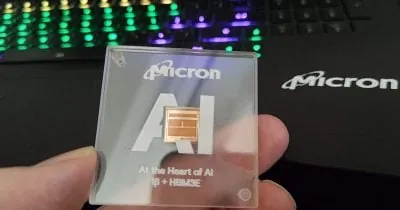
Micron reported record profitability driven by AI workload memory demand, tightening the global chip supply chain. The shift in resource allocation toward machine learning infrastructure is raising input costs for GPU-dependent mining operations.
Written by CoinArticle’s AI Newsroom · from 1 cited source. How we work
Micron's AI-Driven Growth
Micron Technologies reported record profitability as enterprise and cloud customers prioritize memory and storage for large language model training and inference workloads. The surge in AI-related semiconductor orders reflects sustained capital spending by hyperscalers including OpenAI's partners and other model developers competing for competitive advantage in deployed inference capacity.
Implications for Mining Economics
The concentration of semiconductor manufacturing capacity toward AI workloads is narrowing the supply of GPUs and high-bandwidth memory components historically available to crypto mining operations. GPU prices have risen in secondary markets as a result, increasing the per-unit energy cost for mining farms that rely on consumer and data-center graphics processors. This dynamic particularly affects Ethereum proof-of-work miners and GPU-based altcoin operations, which compete against AI researchers for the same hardware inventory.
Broader Compute Resource Reallocation
The shift reflects a fundamental reordering of capital flows within the semiconductor and compute sectors. Enterprise spending on AI infrastructure is outpacing both consumer and crypto mining demand, creating a structural headwind for mining profitability unless hash prices rise proportionally. Miners relying on older-generation GPUs face accelerating hardware obsolescence as manufacturers deprioritize inventory of components no longer optimized for current AI workloads.
Why It Matters
For Traders
Mining-dependent token yields may compress as hardware costs rise; monitor mining difficulty and hashrate on Ethereum alternatives for signs of capitulation.
For Investors
GPU mining's margin profile is structurally deteriorating as AI workloads claim semiconductor capacity; mining exposure now carries elevated commodity-input risk.
For Builders
ASIC-resistant or GPU-optimized protocols face rising hardware headwinds; consider whether your mining incentives remain viable under persistent chip scarcity favoring AI.
This article is for information only and is not financial advice. Read the full disclaimer.