Aptos Unveils Encrypted Mempool to Reduce Front-Running Risk
Aptos introduced an encrypted mempool feature that obscures transaction intent until block confirmation, aiming to mitigate front-running attacks. The implementation could reshape how transactions are ordered and executed on the network.
Written by CoinArticle’s AI Newsroom · from 1 cited source. How we work
Encrypted Mempool Design
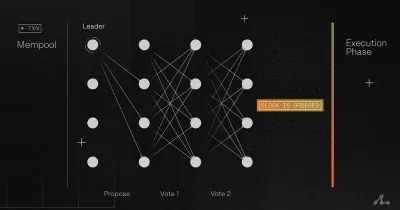
Aptos unveiled an encrypted mempool system that keeps transaction details hidden from validators and block builders until a transaction is included in a finalized block. The approach encrypts transaction content at the mempool stage, preventing observers from seeing trade direction, asset amounts, or smart contract interactions before execution. This design differs from traditional mempools where pending transactions are visible to network participants in the clear.
Front-Running and Fairness Implications
Front-running—where network participants extract value by placing transactions ahead of pending orders—costs DeFi users an estimated billions annually across all chains. By hiding transaction intent until confirmation, Aptos' encrypted mempool removes the information asymmetry that enables this attack. The feature could particularly benefit DEX traders and liquidation-sensitive protocols where transaction ordering directly affects slippage and execution price.
Broader Technical Context
Encrypted mempools represent an emerging category of blockchain security infrastructure, with other Layer 1 and Layer 2 networks exploring similar mechanisms. The challenge for any such system lies in balancing privacy with the need for validators to order and execute transactions fairly. Aptos' implementation details—including encryption key management, decryption timing, and validator incentives—will determine its practical effectiveness against sophisticated extractors.
Why It Matters
For Traders
Front-running protection may reduce slippage on Aptos DEX trades and liquidations, though adoption depends on validator buy-in and actual deployment timeline.
For Investors
Credible MEV mitigation tools differentiate Layer 1s in a crowded market and signal protocol maturity; execution quality matters more than novelty.
For Builders
DeFi and DEX teams can architect transactions assuming reduced front-running risk, simplifying UX design and removing need for private RPC endpoints.
This article is for information only and is not financial advice. Read the full disclaimer.