Bitcoin's 2025 Volatility: A Challenge for Institutional Investors
Bitcoin's significant price reversals in 2025 highlight the unique challenges institutional investors face in managing a volatile asset. The combination of custody fees and lack of returns reveals a critical need for strategies to mitigate costs during price stagnation.
Written by CoinArticle’s AI Newsroom · from 1 cited source. How we work
The Cost of Volatility Without Returns
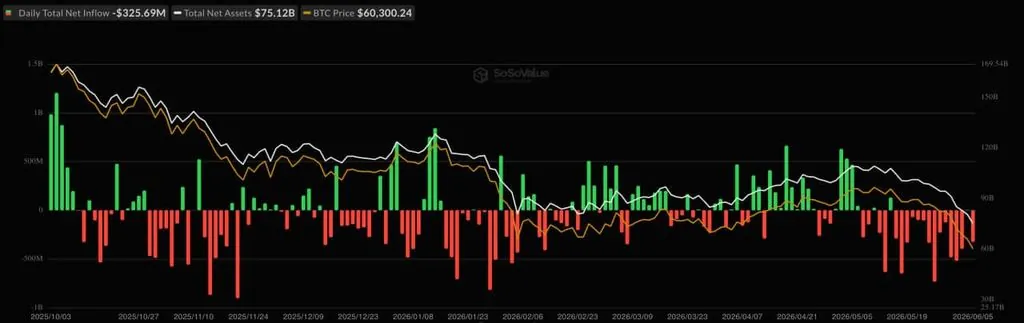
Bitcoin's dramatic price action in 2025 has underscored a critical challenge facing institutional investors: the burden of holding a volatile, non-yielding asset through entire market cycles. What initially seemed like a promising 34% surge earlier in the year ultimately evaporated, leaving institutions grappling with hefty custody bills and nothing tangible to show for their investments.
A Complete Reversal
The cryptocurrency began 2025 with significant momentum, rising 34% and sparking optimism among institutional holders. However, these gains proved transient. Bitcoin soon retraced its entire advance, dropping back to year-start levels and placing institutional portfolios in a neutral position—at least on paper.
The Hidden Drain on Returns
While retail investors utilizing self-custody solutions may emerge from such volatility relatively unscathed—beyond the opportunity costs—institutional holders face a far more complex reality. These entities often rely on professional custody services that incur ongoing fees, regardless of market performance. Throughout Bitcoin's tumultuous journey this year, institutions continuously paid for secure storage without reaping any offsetting returns.
In contrast to traditional assets like bonds that provide interest income or dividend-yielding equities, Bitcoin delivers no native yield. This fundamental characteristic means that during periods of lateral or negative price movement, institutional holders suffer guaranteed losses from custody expenses while receiving no compensation for their capital deployment.
Implications for Institutional Adoption
This reality raises crucial questions about Bitcoin's utility in institutional portfolios. Historically, the cryptocurrency's value proposition has rested on the potential for price appreciation and portfolio diversification. However, prolonged episodes of volatility without net gains create a challenging cost structure that erodes returns in ways that may not be immediately evident when assessing overall performance.
For chief financial officers and treasury managers trying to justify Bitcoin allocations, presenting a narrative that highlights substantial custody costs without corresponding gains proves burdensome. This stands in stark contrast to traditional cash management strategies, where even conservative instruments tend to generate some level of positive return.
Moreover, the situation underscores the growing interest in Bitcoin yield products within the institutional space, as firms actively search for strategies to offset holding costs during volatile or sideways markets.
Conclusion
Bitcoin's tumultuous 2025 serves as a poignant reminder that volatility can be a double-edged sword, revealing that institutional crypto investment comes with persistent costs—regardless of price performance. As the digital asset industry continues to mature, the conversation around generating returns during non-appreciating periods will likely take center stage in institutional investment strategies.
Why It Matters
For Traders
Understanding the volatility and associated costs of Bitcoin can help traders navigate the crypto market more effectively, especially amid uncertain conditions.
For Investors
Long-term investors need to be aware of the implications of custody costs on their returns and consider strategies to mitigate these expenses in their portfolios.
For Builders
Developers should explore innovative solutions and yield products that can provide institutional clients with more robust options to earn returns during price consolidation.
This article is for information only and is not financial advice. Read the full disclaimer.