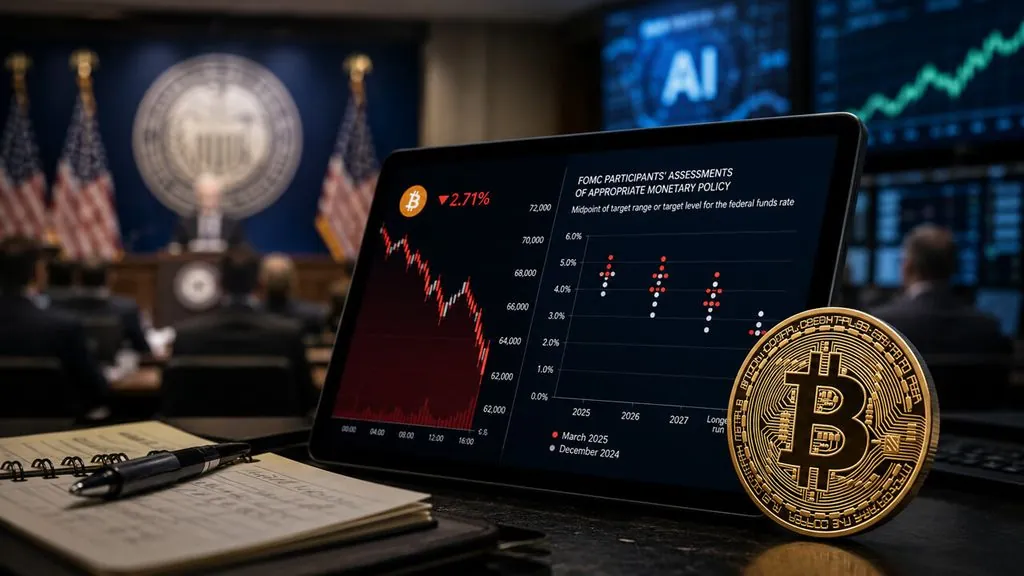
Bitcoin Falls to $59,700 as Risk-On Sentiment Boosts Stocks
Bitcoin declined to $59,700 as geopolitical tensions eased between the U.S. and Iran, prompting a rally in equity futures. The decoupling suggests crypto is not tracking traditional risk assets as closely during periods of de-escalation.
Written by CoinArticle’s AI Newsroom · from 1 cited source. How we work
Diverging Market Reactions
Bitcoin fell to $59,700 after reports emerged that the U.S. and Iran had agreed to halt strikes and resume diplomatic talks. U.S. equity futures rose on the news, reflecting typical risk-on repositioning when geopolitical uncertainty diminishes. The two assets moved in opposite directions despite both historically benefiting from reduced macro uncertainty.
Bitcoin's Weekly Decline
Bitcoin remains down 6.8% over the past seven days, according to price data. The decline predates the recent Iran de-escalation announcement and reflects broader weakness in cryptocurrency markets independent of traditional risk-asset sentiment.
Implications for Correlation
The divergence raises questions about the strength of correlation between crypto and equities during risk-sentiment reversals. Historically, both asset classes have rallied together when geopolitical risk abates, but this episode suggests Bitcoin may be responding to different marginal drivers or facing sell pressure from other sources.
Why It Matters
For Traders
Bitcoin weakness amid a risk-on move is unusual; traders holding long positions may face headwinds if equities continue rallying without crypto participation.
For Investors
Weakening correlation between crypto and equities during de-risking cycles suggests Bitcoin is not yet functioning as a reliable hedge or risk-asset proxy.
For Builders
Protocol teams may face reduced trading volume and ecosystem activity if macro risk-off moves no longer reliably drive inflows to on-chain protocols.
This article is for information only and is not financial advice. Read the full disclaimer.