Bitcoin's Inflation Hedge Narrative Tested as US Expectations Rise to 4.8%
U.S. one-year inflation expectations climbed to 4.8% in May, renewing questions about Bitcoin's effectiveness as an inflation hedge. The move marks a fresh stress test for the "digital gold" narrative that has underpinned much of crypto's long-term investment thesis.
Written by CoinArticle’s AI Newsroom · from 1 cited source. How we work
Inflation Expectations Rise
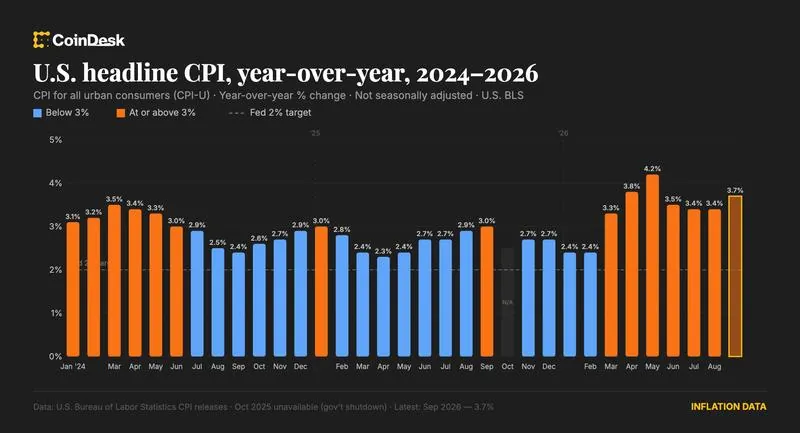
U.S. one-year inflation expectations reached 4.8% in May, according to survey data, signaling persistent price pressure in the economy. The figure represents a notable uptick and underscores that inflation, while off its 2022 peaks, remains elevated relative to the Federal Reserve's 2% target. This backdrop puts renewed focus on whether Bitcoin and other cryptocurrencies deliver the inflation-protection properties investors have attributed to them.
The Digital Gold Thesis Under Pressure
The "digital gold" narrative—the claim that Bitcoin functions as a store of value and hedge against currency debasement—relies on the asset outperforming in inflationary environments. Bitcoin's fixed supply of 21 million coins forms the theoretical basis for this comparison to precious metals. However, crypto's historical performance during inflationary episodes has been inconsistent, with Bitcoin's price driven by broader risk appetite, monetary policy shifts, and regulatory sentiment as much as inflation dynamics. A sustained rise in inflation expectations could test whether Bitcoin buyers treat the asset as a safe haven or whether macro volatility continues to dominate its movement.
Why It Matters
For Traders
Higher inflation expectations may increase Bitcoin volatility as markets reassess safe-haven demand; monitor correlation with real yields and USD strength over the next 24-72 hours.
For Investors
Persistent inflation above target weakens the case for the "digital gold" hedge if Bitcoin does not outperform traditional assets; re-evaluate long-term allocation thesis accordingly.
For Builders
Inflation narratives drive narratives around Bitcoin alternatives and stablecoins; protocol teams should track whether sustained price pressure reshapes user demand for value-store properties.
This article is for information only and is not financial advice. Read the full disclaimer.