Bitcoin's Market Divergence: Unpacking the Underperformance Phenomenon
Despite strong fundamentals, Bitcoin is underperforming compared to other asset classes. This article examines the factors contributing to this market divergence and the impact of derivatives on price discovery.
Written by CoinArticle’s AI Newsroom · from 1 cited source. How we work
Market Performance Divergence
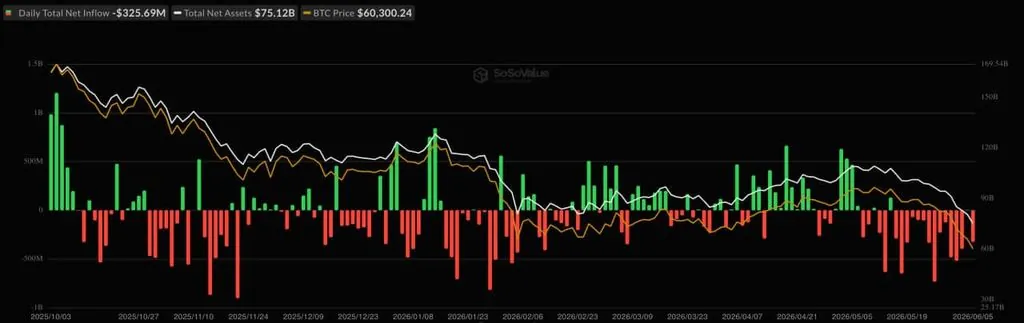
Bitcoin continues to lag behind other major asset classes, even as it maintains robust fundamental indicators. This anomaly highlights a striking divergence between the cryptocurrency's intrinsic strengths and its overall market performance. Analysts are closely examining the current mechanisms that are influencing Bitcoin’s price dynamics.
The Underperformance Reality
While traditional assets and various alternative cryptocurrencies exhibit resilience or growth under current market conditions, Bitcoin has struggled to keep pace with these competitors. This relative weakness starkly contrasts several positive fundamental indicators that would typically lead to stronger price performance.
As the world's largest cryptocurrency by market capitalization, this disconnect prompts critical questions about the prevailing market dynamics and the forces shaping Bitcoin’s valuation.
Derivatives Dominating Price Discovery
Recent analysis suggests that Bitcoin's price movement is increasingly dictated by derivatives trading—specifically hedging activities and synthetic leverage—rather than organic buying pressure from long-term holders. This derivatives-driven market structure has effectively disconnected price action from the underlying conviction of Bitcoin investors.
Synthetic leverage, allowing traders to gain exposure to Bitcoin without direct ownership, has become a primary influencer of short-term price fluctuations. Concurrently, the hedging strategies employed by both institutional and retail traders create additional downward pressure, often overshadowing significant fundamental developments.
Conviction vs. Market Forces
Perhaps most strikingly, the traditional conviction of Bitcoin holders—a key driver of price trajectories in the past—now appears to have a diminished impact on market behavior. This shift marks a departure from historical patterns where strong holder sentiment typically correlated with price support and upward momentum.
Today’s environment suggests that derivative markets hold disproportionate importance in Bitcoin’s price discovery process, potentially resulting in temporary dislocations from its fundamental value.
Market Implications
This trend illustrates the evolving nature of Bitcoin's market structure as it matures and integrates more closely with traditional financial systems. The growing dominance of derivatives and synthetic instruments may introduce heightened volatility and complexity to price movements, complicating fundamental analysis in the short term.
For investors, this context stresses the importance of differentiating between long-term fundamental value and short-term price action driven by leverage and hedging strategies.
Conclusion
Bitcoin’s current underperformance relative to its strong fundamentals underscores the intricate interplay between derivatives markets and spot prices within modern cryptocurrency trading. As synthetic leverage and hedging increasingly dominate the price discovery landscape, the connection between holder conviction and market performance remains temporarily disrupted.
Why It Matters
Traders
In a derivatives-dominated market, traders must adapt their strategies to account for synthetic leverage and heightened volatility, emphasizing the importance of robust risk management.
Investors
For long-term investors, understanding the distinction between fundamental value and short-term price fluctuations becomes critical in navigating the evolving market landscape.
Builders
Developers should consider the implications of derivative trading on market dynamics and explore how to leverage these trends when building future products and services in the crypto space.
This article is for information only and is not financial advice. Read the full disclaimer.