Bitcoin vs. Dollar: Navigating Economic Challenges in 2023
Bitcoin traders are outperforming the U.S. dollar as it declines in value. This article explores the implications for traders, investors, and builders amid economic volatility.
Written by CoinArticle’s AI Newsroom · from 1 cited source. How we work
Bitcoin vs. The Dollar: An Ongoing Battle
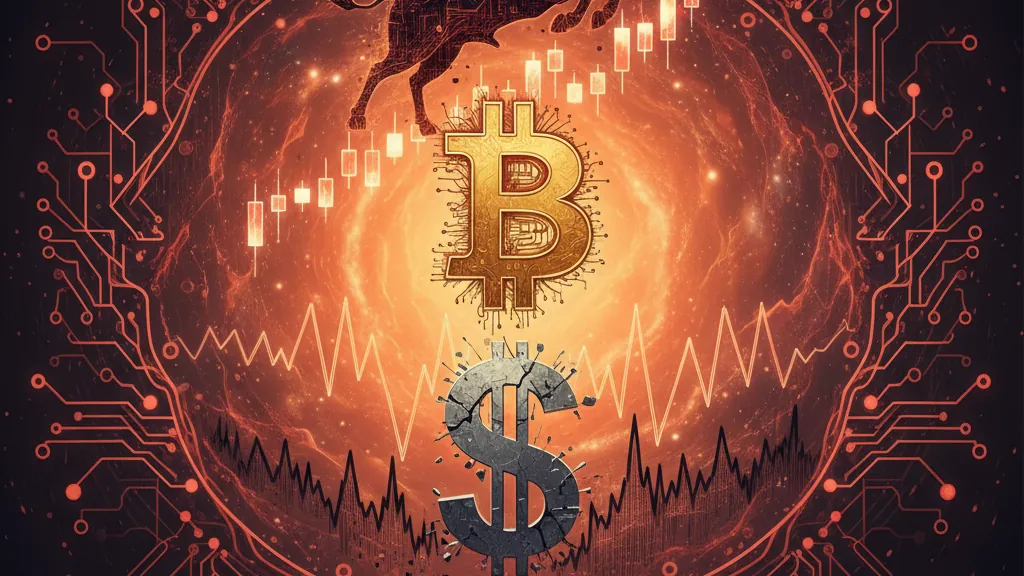
Despite recent downtrends in cryptocurrency markets, Bitcoin traders are consistently outperforming the U.S. dollar, which has seen a significant decline in value—now trading at just 89 cents. This stark reality highlights the enduring appeal of Bitcoin, particularly for those seeking to preserve purchasing power amid economic volatility.
The Current Economic Landscape
Since the start of 2023, the American dollar has depreciated, leading to a troubling scenario for consumers and businesses alike. While both Bitcoin and the dollar face diminished purchasing power, the cryptocurrency appears to maintain a relative edge in performance. The fall of the dollar to 89 cents has heightened inflation concerns, generating added pressure on traders and investors aiming to secure their assets.
Bitcoin, despite experiencing a downturn in price, has historically shown resilience against broader economic downturns. Current trends indicate that traders leveraging Bitcoin are better positioned than those relying heavily on the dollar. As markets react to inflationary fears and diminishing confidence in the dollar, alternative assets like Bitcoin are attracting growing interest.
Why It Matters
For Traders
Traders are increasingly recognizing the importance of diversifying their portfolios to combat the declining strength of the dollar. Bitcoin has emerged as a viable alternative, offering a hedge against inflation. Although Bitcoin's value has also decreased alongside the dollar, it continues to draw traders who see potential for long-term growth. The ongoing adoption of Bitcoin for transactions further cements its pivotal role in modern finance.
For Investors
For investors, the current economic scenario reinforces the need to rethink traditional asset allocation strategies. The depreciation of the dollar and its implications for real-world purchasing power necessitate a reevaluation of investment strategies. Bitcoin enables investors to diversify their portfolios beyond fiat currencies, protecting them against inflationary pressures and uncertainties associated with the dollar.
For Builders
For builders in the tech and finance sectors, fluctuations in both Bitcoin and the dollar signal an evolving landscape ripe for innovation. The current turmoil presents opportunities for developing new applications and services that leverage the benefits of decentralized finance (DeFi) and blockchain technology. As traditional financial systems face challenges, there is an urgent need to create systems that can withstand economic shifts, with Bitcoin remaining at the forefront of such developments.
Conclusion
As the U.S. dollar continues to navigate troubled waters, the resilience of Bitcoin offers a contrasting narrative. While both monetary entities struggle with decreased purchasing power, Bitcoin traders maintain an advantage that suggests a shifting paradigm in asset management. Observing how this dynamic evolves could provide critical insights for traders, investors, and builders alike in a rapidly changing economic landscape.
This article is for information only and is not financial advice. Read the full disclaimer.