Chainlink Targets Bank FX Settlement Inefficiency With New Stablecoin Framework
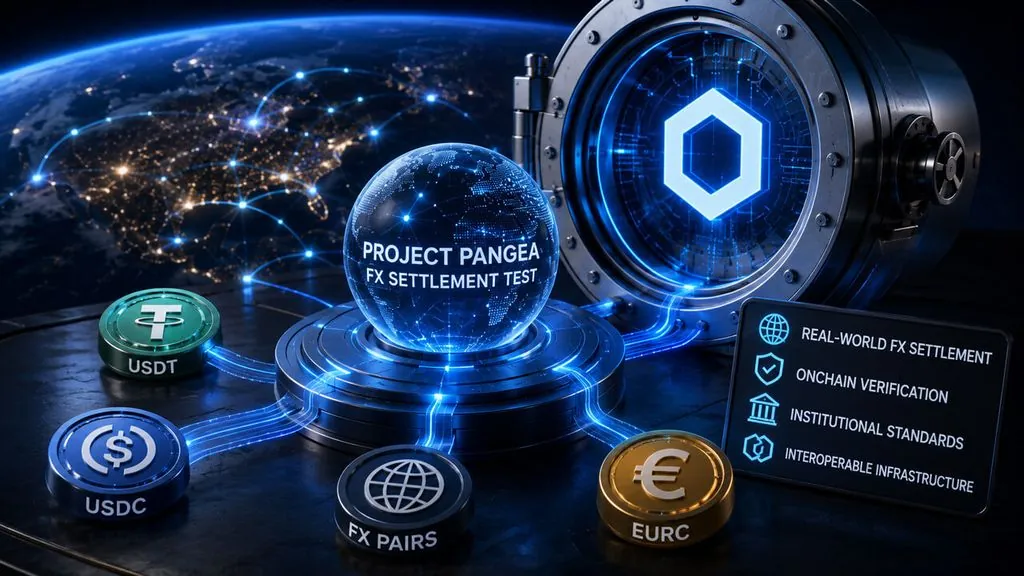
Chainlink released a framework designed to enable T+0 payment-versus-payment settlement for foreign exchange transactions using stablecoins while preserving existing SWIFT and ISO 20022 bank workflows. The approach targets capital locked in traditional multi-day FX settlement cycles.
Written by CoinArticle’s AI Newsroom · from 1 cited source. How we work
The Settlement Problem Chainlink Targets
Traditional foreign exchange settlement typically requires two to three days for final payment confirmation, during which capital remains locked and counterparties face settlement risk. Chainlink's framework aims to compress that timeline to T+0 — same-day atomic settlement — by leveraging stablecoins as the rails while keeping banks within their existing SWIFT and ISO 20022 messaging infrastructure.
How the Framework Preserves Bank Compatibility
Rather than forcing financial institutions to adopt entirely new infrastructure, Chainlink's design maintains compatibility with SWIFT and ISO 20022 standards that banks already use for cross-border payments. The framework layers stablecoin settlement on top of these familiar workflows, reducing both adoption friction and operational risk for institutions.
Why Settlement Speed Matters
The amount of capital tied up in FX settlement gaps represents a meaningful but currently opaque cost to the global financial system. By reducing settlement from T+2 or T+3 to T+0, institutions would free up liquidity and reduce their exposure to counterparty default risk during the settlement window. The approach positions stablecoins as plumbing rather than as a replacement asset class.
Why It Matters
For Traders
If adopted, T+0 FX settlement could reduce spreads and counterparty risk in spot FX pairs, though enterprise adoption timelines are measured in years not months.
For Investors
Success here signals stablecoins filling a genuine plumbing role in global finance rather than competing with fiat; it validates the infrastructure thesis over the replacement thesis.
For Builders
Banks maintaining SWIFT compatibility while settling on-chain means stablecoin platforms must support interoperability with legacy financial rails, not replace them entirely.
This article is for information only and is not financial advice. Read the full disclaimer.