CME Sues CFTC Over Regulatory Authority for Perpetual Futures
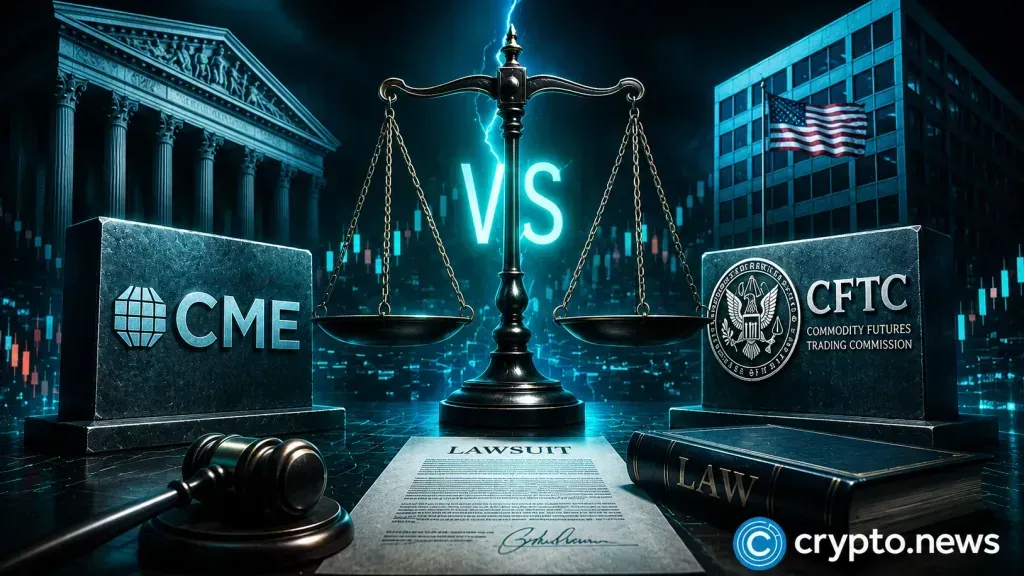
CME has filed a lawsuit against the CFTC challenging the regulator's jurisdiction over perpetual futures, arguing perps should be classified as futures rather than swaps. The case will determine which agency controls oversight of crypto's largest derivatives market.
Written by CoinArticle’s AI Newsroom · from 1 cited source. How we work
The Core Dispute
CME Group has challenged the CFTC's regulatory authority over perpetual futures, filing a lawsuit that hinges on how perps are legally classified. CME contends that perpetual futures contracts should fall under the CFTC's futures framework, where CME operates as a registered derivatives exchange. The CFTC has taken the position that perps function more like swaps, which fall under different regulatory oversight and reporting requirements.
Market Implications
The classification question is not academic: it determines which agency writes the rulebook for the largest derivatives market in crypto by volume. Perpetual futures on centralized exchanges and decentralized protocols represent hundreds of billions of dollars in notional open interest. A ruling that perps are swaps rather than futures could require market participants to restructure positions, adjust leverage limits, and comply with swap-specific margin and clearing rules that differ from those governing traditional futures contracts.
What's at Stake
Beyond CME's competitive position, the lawsuit touches on a fundamental gap in U.S. crypto regulation. The CFTC's existing swaps regime was built for over-the-counter derivatives between institutional counterparties, not the retail-accessible leveraged trading that dominates crypto perp exchanges. A court ruling either way will force policymakers to clarify how existing commodity and derivatives law applies to products that did not exist when those laws were written.
Why It Matters
For Traders
A swap classification could trigger margin and leverage requirements that reduce effective position sizing on retail-facing perp exchanges within weeks to months.
For Investors
Regulatory clarity on perps affects how institutional capital allocates to crypto derivatives; a futures ruling favors established CME; a swap ruling may accelerate offshore migration.
For Builders
DEX and derivative protocol teams should model compliance costs under both swap and futures regimes; classification determines which ruleset governs their products.
This article is for information only and is not financial advice. Read the full disclaimer.