Cryptocurrency Market Dynamics Shift: October's Lasting Impact
The cryptocurrency market has exhibited significant shifts since October, with reduced leverage, diminished liquidity, and weakened ETF demand redefining the landscape. Traders and investors must adapt to these new conditions.
Written by CoinArticle’s AI Newsroom · from 1 cited source. How we work
Market Dynamics Shift Following October Disruption
The cryptocurrency market has undergone a notable transformation since October, with traders and analysts observing fundamental changes in market structure that extend beyond typical volatility patterns. Bitcoin, currently trading in the mid-$80,000 range, operates in a markedly different environment compared to earlier in the year.
The Catalyst: Tariff-Induced Liquidation Event
Two months ago, headlines surrounding Trump's tariff policies triggered a historic liquidation cascade that sent shockwaves through cryptocurrency markets. This event appears to have marked a turning point, after which market participants began noticing persistent changes in trading conditions and market behavior.
Three Pillars of Market Change
Data analysis reveals three key characteristics now defining the Bitcoin market:
Reduced Leverage: Trading activity shows significantly lower leverage ratios compared to pre-October levels, suggesting a more cautious approach among market participants. This shift indicates that traders are taking smaller position sizes relative to their capital.
Diminished Liquidity: Market depth has thinned considerably, meaning fewer orders are available at various price levels. This reduction in liquidity can lead to increased price volatility and larger spreads between buy and sell orders.
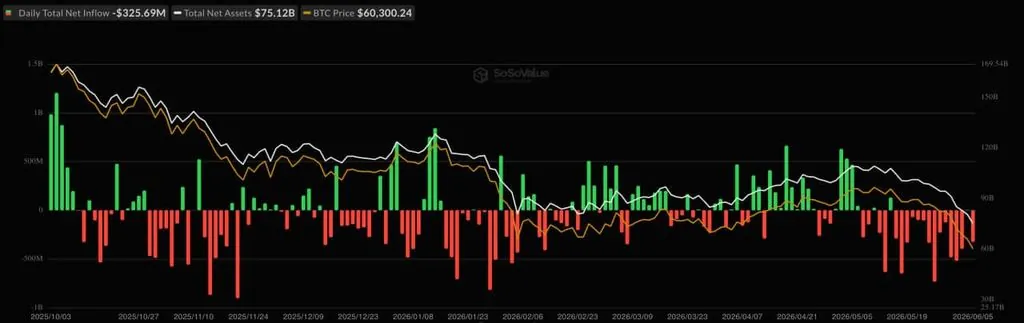
Weakened ETF Demand: Exchange-traded fund flows, which previously provided substantial buying pressure for Bitcoin, have notably decreased. This reduction in institutional demand through ETF vehicles represents a significant shift from earlier market dynamics.
Implications for Market Participants
The combination of these factors creates a trading environment that differs substantially from the conditions that prevailed earlier in the year. While lower leverage may reduce the risk of cascading liquidations, thinner liquidity means that large orders can move prices more dramatically. The weakened ETF bid removes a previously reliable source of demand that had supported price appreciation.
Market participants may need to adjust their strategies to account for these structural changes, including wider stop-losses to accommodate increased volatility and smaller position sizes to navigate reduced liquidity.
Conclusion
Data confirms what traders have been sensing: October marked a genuine inflection point for cryptocurrency markets. Whether these conditions represent a temporary adjustment or a more permanent shift in market structure remains to be seen, but the current environment of reduced leverage, thinner liquidity, and weaker institutional demand presents distinct challenges and opportunities for those operating in the space.
Why It Matters
Traders
Traders should be aware of the increased price volatility and adjusted their strategies accordingly, utilizing smaller position sizes and wider stop-loss orders to mitigate risks in this evolving market landscape.
Investors
Long-term investors should consider the shift in ETF demand as a critical factor impacting market stability, potentially leading to more cautious investment decisions amid rising uncertainty.
Builders
Developers and builders in the crypto space should focus on creating solutions that enhance market liquidity and help stabilize trading conditions, considering the current challenges brought on by reduced leverage and institutional engagement.
This article is for information only and is not financial advice. Read the full disclaimer.