Crypto Market Stuck in 'Extreme Fear' for 14 Days Despite Bitcoin Surge
The crypto market has been in 'Extreme Fear' for 14 consecutive days, as measured by the Crypto Fear & Greed Index, despite Bitcoin trading at five times its price during the FTX collapse. This paradox highlights lingering uncertainty among investors despite significant price recovery.
Written by CoinArticle’s AI Newsroom · from 2 cited sources. How we work
Crypto Market Stuck in 'Extreme Fear' for 14 Days Despite Bitcoin Surge
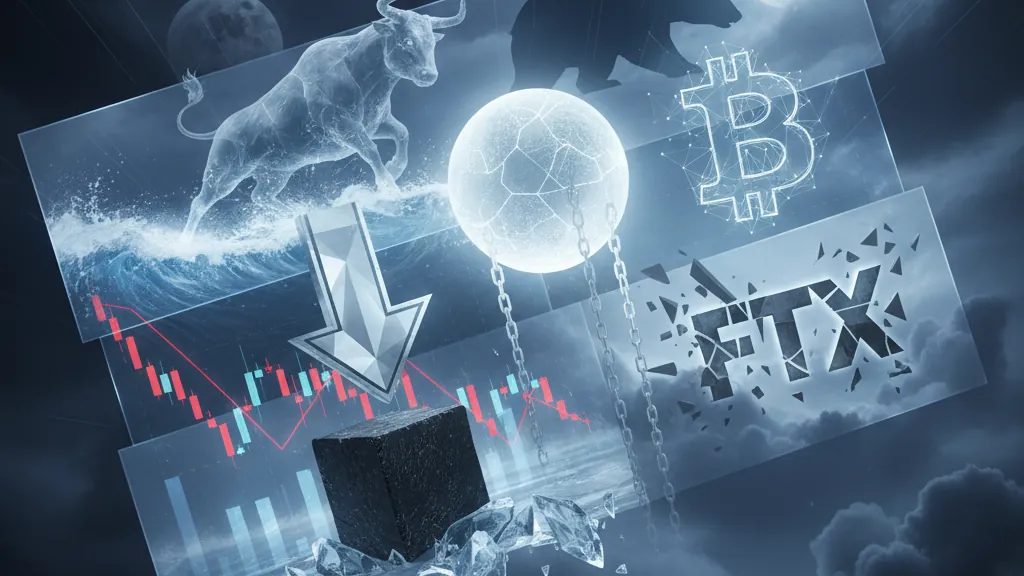
The cryptocurrency market has been entrenched in 'Extreme Fear' territory for an unprecedented 14 days straight, according to the Crypto Fear & Greed Index, a widely-followed indicator of market sentiment. This prolonged period of pessimism is particularly striking given that Bitcoin is currently trading at levels roughly five times higher than during the FTX collapse in late 2022, a time when the index last recorded similar fear levels.
What We Know
The Crypto Fear & Greed Index, which measures market sentiment on a scale from 0 (Extreme Fear) to 100 (Extreme Greed), has remained firmly in the 'Extreme Fear' zone for two weeks. This marks one of the most sustained periods of negative sentiment in recent crypto market history.
Interestingly, the index's current readings are even lower than those seen during the November 2022 collapse of FTX, a catastrophic event that sent shockwaves through the cryptocurrency ecosystem, erasing billions in market value and leading to criminal charges against FTX founder Sam Bankman-Fried. At the time, Bitcoin's price plummeted as investor confidence cratered.
Today, however, the market presents a starkly different picture. Bitcoin has experienced significant price appreciation since the FTX debacle, currently trading at approximately five times its value during that crisis. Despite this, market sentiment remains deeply pessimistic, suggesting that factors beyond price performance are driving investor caution.
Key Details
The Crypto Fear & Greed Index aggregates multiple data points—including volatility, market momentum, social media sentiment, Bitcoin dominance, and trading volume—to gauge overall market sentiment.
The FTX collapse in late 2022 was one of the most significant institutional failures in cryptocurrency history, triggering widespread contagion fears and regulatory scrutiny. While Bitcoin has since rebounded strongly, the psychological scars from that event appear to linger, as evidenced by the current sentiment readings.
The disconnect between Bitcoin's strong price performance and the prevailing negative sentiment suggests a more complex market dynamic. Lingering concerns about market stability, regulatory uncertainty, and macroeconomic pressures on risk assets may be contributing to this divergence.
Why This Matters
The persistence of 'Extreme Fear' for 14 consecutive days is a notable development for several reasons. First, it underscores the deep risk aversion among crypto investors, even in the face of substantial price gains. This suggests that confidence in the market's long-term stability has not fully recovered from past crises.
Second, the comparison to FTX-era sentiment levels highlights the lasting psychological impact of major market events. While Bitcoin has recovered and multiplied in value, the emotional toll on investors continues to shape market sentiment.
For traders and investors, extreme fear readings have historically presented potential buying opportunities, as markets often rebound when sentiment reaches pessimistic extremes. However, the unusual duration of this fear period—14 days—raises questions about deeper structural issues. These could include concerns over regulatory crackdowns, technological vulnerabilities, or broader macroeconomic instability.
This situation also reflects the ongoing maturation challenges facing cryptocurrency markets. The disconnect between price performance and sentiment highlights the uncertainty surrounding crypto's role in the broader financial ecosystem and its susceptibility to external pressures.
Key entities: Crypto Fear & Greed Index, FTX, Bitcoin
Sentiment: Bearish
This article is for information only and is not financial advice. Read the full disclaimer.