DeFi’s Promised Revolution: Bridging the Gap for the Unbanked
Decentralized Finance (DeFi) aims to transform the financial landscape by promoting inclusivity and accessibility. However, it faces significant obstacles in truly engaging the unbanked population and fulfilling its promise of democratizing finance.
Written by CoinArticle’s AI Newsroom · from 1 cited source. How we work
DeFi’s Promised Revolution
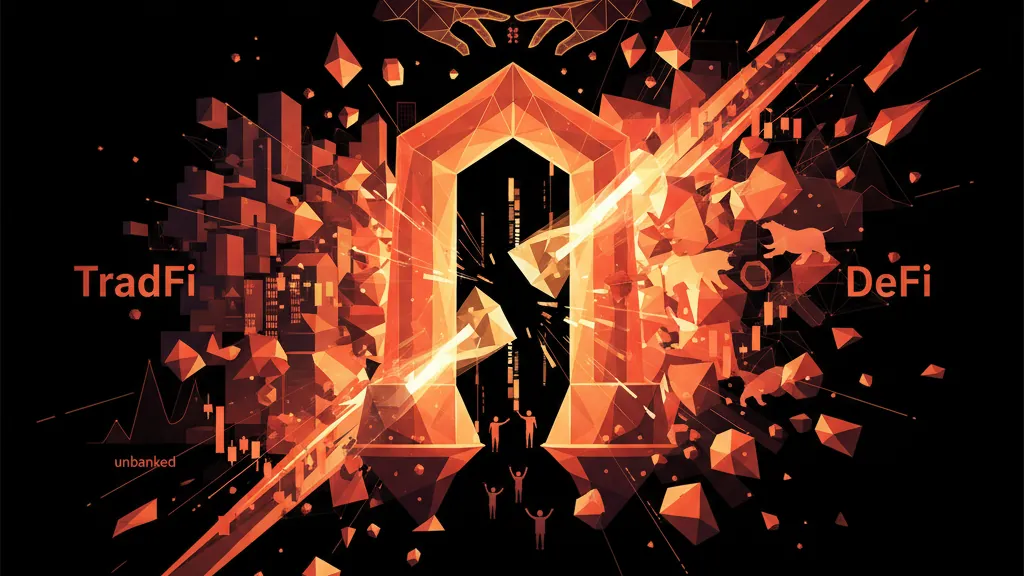
Decentralized Finance (DeFi) has been considered a transformative force in the financial landscape, poised to overhaul Traditional Finance (TradFi) and make financial services more inclusive and accessible for a broader audience. The appeal of DeFi stems from its ability to democratize finance—removing gatekeepers, reducing costs, and providing services that were once confined to those capable of navigating the complexities of traditional banking. However, a closer examination of the current landscape reveals that DeFi has yet to truly replace TradFi; instead, it frequently operates alongside traditional financial systems.
The Unbanked Dilemma
Despite the innovative technology that underpins DeFi platforms, their accessibility for the unbanked remains a critical challenge. The unbanked population—those without access to conventional banking services—often finds DeFi to be distant, abstract, and largely unwelcoming. Many individuals in this demographic lack the necessary resources, knowledge, or technology to effectively engage with DeFi solutions.
The core issue isn’t the technology itself, which has made considerable strides in usability and functionality, but rather the frameworks upon which these decentralized systems are built. Frequently reliant on gateways, exchanges, and infrastructures inherited from TradFi, these barriers hinder entry for potential users. The complex processes involved in setting up a digital wallet, understanding cryptocurrency volatility, and navigating the multitude of DeFi protocols can be daunting for those already marginalized by traditional banking systems.
Bridging the Gap
To realize its full potential, DeFi must evolve beyond merely coexisting with TradFi and actively engage with the unbanked community. This requires the development of user-friendly interfaces, educational resources, and support systems that simplify DeFi for those who have been excluded from the financial narrative.
Additionally, fostering partnerships between DeFi projects and organizations focused on financial inclusion could help bridge this gap. By creating initiatives that resonate with local communities and address their specific needs, DeFi could transition from an abstract concept to a tangible solution for millions.
Why It Matters
For Traders
Understanding the relationship between DeFi and TradFi is essential for traders, as the effectiveness of their trading strategies may depend on recognizing how traditional frameworks influence market dynamics and liquidity.
For Investors
Investors should evaluate the scalability of DeFi projects—true innovation in this space must attract and engage the unbanked population to unlock new market opportunities. Projects that demonstrate a commitment to accessibility could provide more sustainable returns.
For Builders
For developers and builders in the space, fostering inclusivity and optimizing user experience will be crucial to driving adoption. Those who succeed in bridging the divide between DeFi and the unbanked will likely find themselves leading the charge in the next financial revolution.
In conclusion, for DeFi to disrupt TradFi genuinely, it must go beyond operating in its shadow. A targeted focus on inclusivity and accessibility could redirect its trajectory toward fulfilling its promise of a more equitable financial future.
This article is for information only and is not financial advice. Read the full disclaimer.