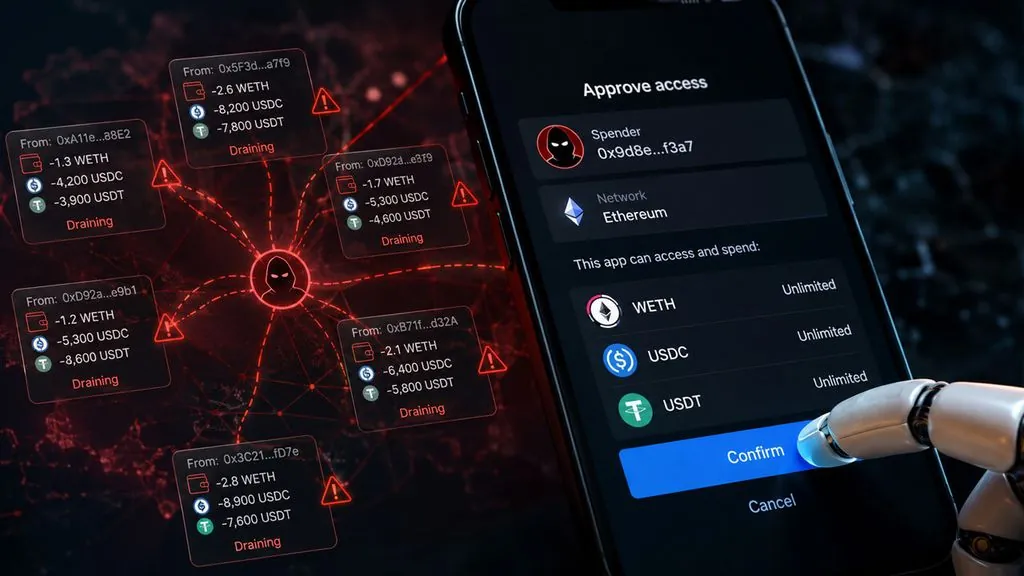
Ethereum MEV Bot Jaredfromsubway Loses $7.5M in Allowance Drain
The Jaredfromsubway MEV bot, responsible for roughly 70% of Ethereum sandwich attacks, lost more than $7.5 million after approving attacker-controlled contracts to spend its tokens. The bot's automated system authorized the transactions as part of what appeared to be routine trading routes, but the permissions enabled a complete token drain.
Written by CoinArticle’s AI Newsroom · from 1 cited source. How we work
How the Drain Occurred
The Jaredfromsubway MEV bot (jaredfromsubway.eth) approved a series of transactions that appeared consistent with its normal profit-taking strategies. Those token approvals, granted to attacker-controlled contracts, remained active after execution. An attacker then leveraged the standing permissions to drain the bot's holdings, extracting more than $7.5 million in tokens.
The bot had been one of Ethereum's most prolific MEV extractors, linked to approximately 70% of sandwich attacks on the network. Sandwich attacks insert transactions ahead of or behind user trades to capture price slippage, generating revenue for the bot operator at the expense of retail traders.
Attack Vector and Implications
The drain illustrates a persistent vulnerability in MEV bot design: the use of blanket token approvals to enable atomic trading sequences. While necessary for multi-step arbitrage and sandwich strategies, such approvals create a window of opportunity if the approved contract address is compromised or controlled by a malicious party.
On-chain approvals are a standard feature of Ethereum token interactions, but MEV bots typically operate with looser permission models than retail wallets because they require rapid execution across multiple contracts in a single transaction. The Jaredfromsubway incident suggests that automated permission grants without explicit transaction-level gating can accumulate material risk.
Why It Matters
For Traders
Major MEV bot going offline may temporarily reduce sandwich attack frequency on Ethereum, potentially improving execution quality for retail transactions over the next 24-48 hours.
For Investors
The incident underscores persistent smart contract design risks in high-frequency trading infrastructure and may prompt renewed scrutiny of MEV extraction sustainability.
For Builders
MEV bot developers should review approval patterns and consider transaction-level spend limits rather than blanket allowances to reduce exposure to compromised intermediary contracts.
This article is for information only and is not financial advice. Read the full disclaimer.