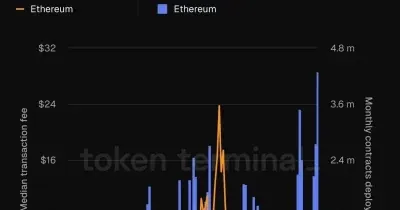
Ethereum Transaction Fees Hit All-Time Lows Amid Rising Network Activity
Ethereum's base layer transaction fees have declined to record lows despite increased on-chain activity, driven primarily by Layer 2 solutions absorbing transactional volume. The sustained low-fee environment is pressuring the network's deflationary dynamics through reduced ETH burn.
Written by CoinArticle’s AI Newsroom · from 1 cited source. How we work
Fee Compression Amid Volume Growth
Ethereum's transaction fees have fallen to historic lows even as daily on-chain activity has increased, according to on-chain data. The decline reflects a structural shift in where transaction settlement occurs: Layer 2 blockchains like Arbitrum, Optimism, and Base are capturing the majority of user transactions, leaving the Ethereum mainnet with lower congestion and thus lower base layer fees. When transaction demand on Layer 1 falls, fewer users compete for block space, pushing fees downward.
Deflationary Impact and Burn Dynamics
Lower mainnet fees directly reduce the amount of ETH burned through the base fee mechanism introduced in the 2021 London upgrade. ETH burn is a key component of Ethereum's deflationary narrative—the argument that as the network matures, supply contraction will support long-term price appreciation. Sustained low fees mean less daily burn, which some investors monitor as a supply-side signal. The shift of economic activity to Layer 2s effectively removes that transaction volume from Ethereum's fee-based burn model, changing the long-term supply dynamics that underpinned earlier bull-case assumptions about the asset.
Accessibility Trade-Off
From a user perspective, low fees make Ethereum more accessible for smaller transactions and retail participants. This broadens the addressable market for on-chain applications and reduces friction for new entrants. However, the sustainability of this low-fee regime depends on Layer 2 adoption continuing to absorb the bulk of transactional load, and on the economic incentives that keep Layer 2 fees competitive.
Why It Matters
For Traders
Lower mainnet fees reduce urgency to use Layer 2s for small trades, but also signal reduced burn velocity, which could affect medium-term supply dynamics narratives.
For Investors
Declining fee burn undermines one pillar of Ethereum's long-term deflationary case; Layer 2 adoption means less direct economic value accrual to the base layer.
For Builders
Low mainnet fees create pricing pressure on Layer 2 sequencers and rollup operators; competitive fee markets across layers may compress margins for infrastructure providers.
This article is for information only and is not financial advice. Read the full disclaimer.