Evaluating Ethereum's 'Ultrasound Money' Status: A Critical Analysis
Ethereum's vision of becoming 'ultrasound money' faces challenges as its value falters against Bitcoin. This article explores the implications of its transition to Proof-of-Stake and market realities for various stakeholders.
Written by CoinArticle’s AI Newsroom · from 1 cited source. How we work
Was Ethereum’s 'Ultrasound Money' Status a Mistake?
Ethereum's ambition to become 'ultrasound money'—a term coined to suggest a deflationary asset comparable to Bitcoin—has come under scrutiny as the cryptocurrency faces significant challenges in the marketplace. Since Ethereum's transition to Proof-of-Stake (PoS) in September 2022, ETH has dropped approximately 65% in value against Bitcoin (BTC), raising concerns among investors and analysts alike about the viability of its monetary policy and its long-term store of value proposition.
The Shift to Proof-of-Stake
The transition to PoS was heralded as a major step forward for Ethereum, aiming to enhance the network's energy efficiency and scalability while introducing mechanisms that could potentially lead to deflationary conditions for ETH. However, contrary to initial expectations that this shift would promote a scarcity-focused economic model, Ethereum has struggled to consistently maintain a deflationary status post-upgrade. While the network has successfully reduced block rewards, the overall inflation rate of ETH has not decreased as dramatically as many anticipated.
This evolution—or lack thereof—has led to uncertainty regarding Ethereum’s proposition as a pioneering digital asset. Traders and investors are increasingly questioning whether the 'ultrasound money' narrative was overly ambitious or simply misaligned with prevailing market realities.
Disappointment Among Investors
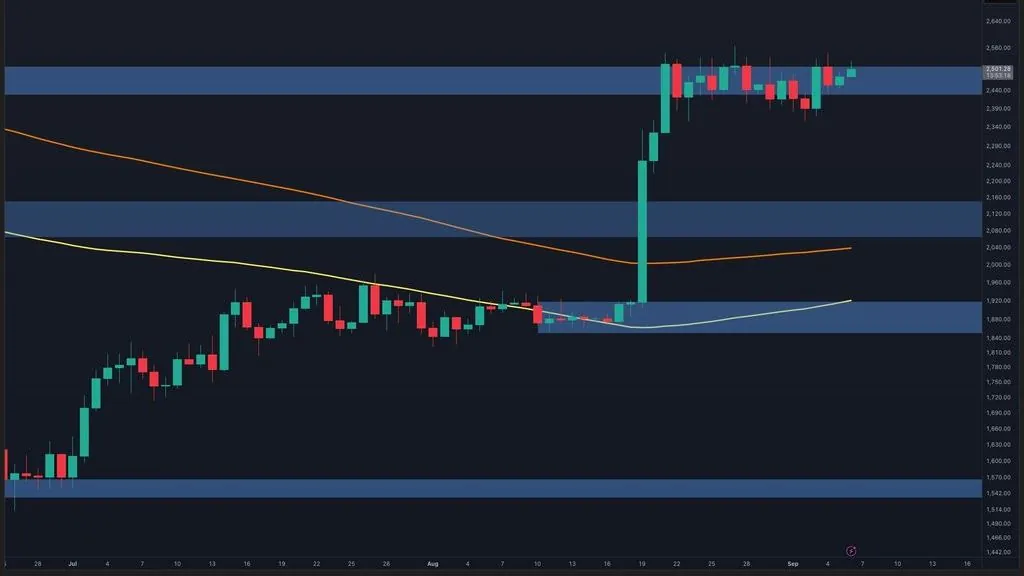
The decline in ETH’s value compared to BTC has left many Ether investors disillusioned. After the switch to PoS, ETH peaked at around $4,800 in late 2021 but has since struggled to regain momentum. Current price levels have disappointed those who anticipated strong post-upgrade performance. As Bitcoin continues to dominate the crypto landscape, Ether’s underperformance is even more striking, prompting many investors to re-evaluate their positions.
Why It Matters
For Traders
Traders should closely monitor Ethereum’s price movements against Bitcoin, recognizing that significant value disparities could indicate shifts in market sentiment. Recent trends may encourage traders to pivot their strategies in favor of Bitcoin over Ethereum in the short to medium term.
For Investors
For investors, scrutinizing Ethereum's 'ultrasound money' narrative can yield valuable insights for long-term investment strategies. Understanding Ethereum's inflationary pressures in relation to Bitcoin’s established deflationary characteristics is vital for making informed investment decisions.
For Builders
For developers and builders in the Ethereum ecosystem, these developments present essential lessons in market expectations and the necessity of sustainable technological improvements. As the community continues to innovate and tackle challenges, it is crucial to communicate a clear roadmap and understanding of how Ethereum's monetary policy will adapt in response to this scrutiny.
In conclusion, while Ethereum aimed to redefine its monetary status through the PoS transition, current financial realities challenge its ambitious narrative, necessitating a reassessment of strategies by all stakeholders moving forward.
This article is for information only and is not financial advice. Read the full disclaimer.