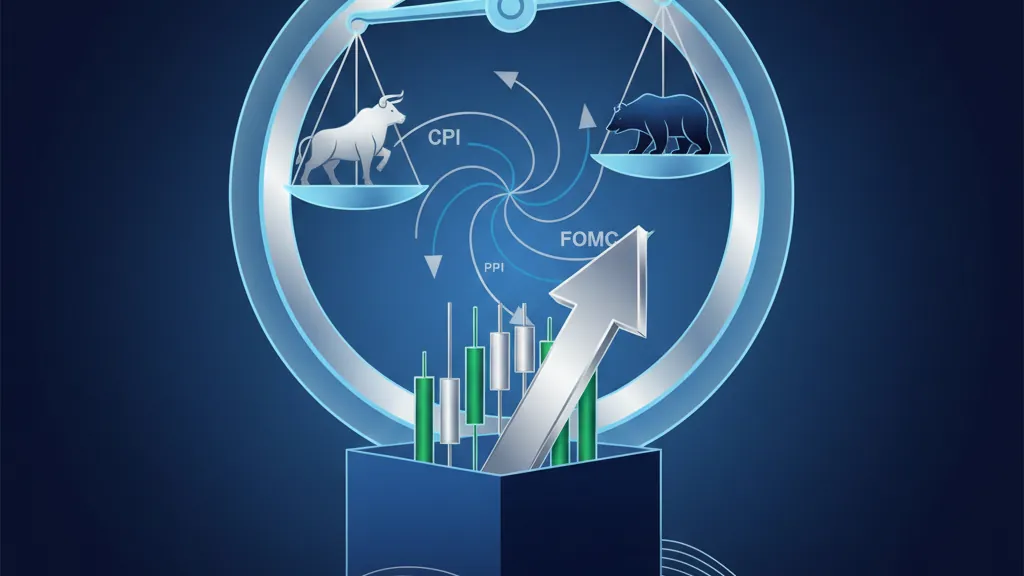
Decoding the Fed's $40 Billion Treasury Bill Purchase Program
The Fed's $40 billion Treasury bill purchase program raises questions about potential monetary easing. However, a closer look reveals it is more about liquidity management than a shift in policy.
Written by CoinArticle’s AI Newsroom · from 1 cited source. How we work
Understanding the Fed's Treasury Bill Program
The Federal Reserve's recent announcement of a $40 billion Treasury bill purchase program has ignited discussions among market participants, raising questions about whether this move indicates a return to quantitative easing and increased monetary stimulus. However, a detailed exploration of the program's mechanics and objectives suggests a different narrative altogether.
Technical Operations, Not Stimulus
The Fed's stated objectives clarify that these Treasury bill purchases aim to maintain ample reserves within the banking system rather than stimulate economic growth or inflate asset prices. This distinction is vital for investors and analysts striving to decode the central bank's current monetary policy stance.
Functioning as a liquidity management tool, the program ensures that banks possess sufficient reserves to meet their operational needs and comply with regulatory requirements. This intervention fundamentally differs from the quantitative easing programs employed during previous economic crises, which explicitly aimed to lower interest rates and bolster economic activity.
Historical Precedent from 2019
Current operations mirror the Fed's response to the 2019 repo market disruption. In September 2019, overnight lending rates in the repurchase agreement market unexpectedly surged, compelling the Fed to inject liquidity into the system via similar Treasury bill purchases and repo operations.
Importantly, the 2019 intervention did not give rise to enduring inflation nor signify a shift toward accommodative monetary policy. Instead, it addressed a technical issue within the financial plumbing that threatened to disrupt normal market functioning. The economy and inflation maintained stability following those operations.
Implications for Markets
The comparison to 2019 provides essential context for interpreting the present program. Although any expansion of the Fed's balance sheet naturally draws attention from market participants seeking clues about future policy directions, the technical nature of these operations indicates their limited implications for broader economic outlooks.
Investors must differentiate between liquidity management operations designed for smooth market functioning and deliberate policy shifts aimed at influencing economic conditions. Conflating these two types of interventions could lead to misguided expectations regarding future inflation trends or asset price movements.
Conclusion
The Fed's $40 billion Treasury bill purchase program signifies a continuation of technical reserve management rather than a pivot towards monetary stimulus. Historical parallels from 2019 illustrate that similar operations can occur without triggering inflationary pressures or indicating a fundamental policy change. Market participants should evaluate this program within its appropriate context as a liquidity management tool, rather than a signal of easier monetary conditions on the horizon.
Why It Matters
For Traders
Understanding the nature of the Fed's operations can help traders gauge market sentiment and adjust their strategies accordingly, avoiding potential pitfalls of misinterpreting liquidity measures as signs of easing monetary policy.
For Investors
Long-term investors need to recognize that the program is aimed at stabilizing the banking system, which could help maintain market integrity. This understanding allows for informed decisions based on actual rather than perceived monetary conditions.
For Builders
Developers and builders should consider the Fed's focus on liquidity management when planning financing and investment strategies, as stable liquidity can foster a healthier environment for project development and economic growth.
This article is for information only and is not financial advice. Read the full disclaimer.