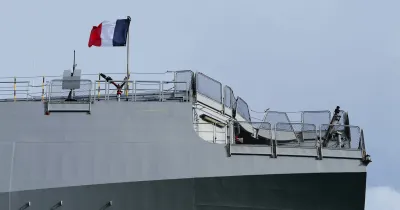
France Boards Oil Tanker Linked to Russian Shadow Fleet
French naval forces intercepted the oil tanker Tagor in the Atlantic, citing suspected links to Russia's shadow fleet operating under sanctions evasion schemes. The action reflects tightening enforcement of international sanctions on Russian energy exports.
Written by CoinArticle’s AI Newsroom · from 1 cited source. How we work
Naval Interception in Atlantic
France's navy boarded the oil tanker Tagor in the Atlantic Ocean, according to reporting citing geopolitical developments. The vessel was flagged as potentially connected to Russia's shadow fleet—a network of aging tankers used to circumvent international sanctions on Russian oil exports. The specific circumstances of the boarding and the tanker's cargo status were not immediately detailed in available accounts.
Enforcement Shift on Shadow Fleet
The interception signals an escalation in direct enforcement actions against vessels suspected of facilitating sanctioned Russian energy trade. Western governments and their navies have increasingly targeted shadow fleet operations after Russian oil shipments continued flowing despite formal trade restrictions. France's action aligns with broader EU and allied efforts to disrupt logistics networks that keep Russian crude moving to global markets.
Geopolitical Context
Escalating naval enforcement reflects heightened geopolitical tensions and a shift toward more aggressive interdiction of sanctions-linked trade. Such actions carry risks of maritime incidents and may prompt counter-responses, adding a new dimension to sanctions enforcement beyond financial and diplomatic channels.
Why It Matters
For Traders
Sanctions enforcement on energy markets can create volatility in commodities and risk assets correlated to geopolitical risk; monitor for spillover into crypto-linked macro moves.
For Investors
Escalating sanctions enforcement and naval action increase systemic geopolitical risk, widening the premium on uncorrelated or non-state-dependent assets.
For Builders
Geopolitical tensions and sanctions enforcement may drive demand for privacy-preserving settlement layers and cross-border payment infrastructure outside state control.
This article is for information only and is not financial advice. Read the full disclaimer.