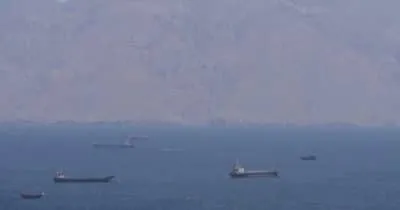
Iran's Strait of Hormuz Warning Reignites Macro Risk Debate in Crypto
Iran's Islamic Revolutionary Guard Corps Navy has warned vessels to avoid the Strait of Hormuz amid escalating regional tensions. The potential closure of the chokepoint, through which roughly 20% of global oil shipments pass, has renewed discussion among crypto participants about the asset class's role as a hedge against geopolitical disruption.
Written by CoinArticle’s AI Newsroom · from 1 cited source. How we work
The Warning and Its Scope
The IRGC Navy issued a statement Tuesday cautioning maritime traffic to avoid the Strait of Hormuz, citing unspecified security concerns. The strait, located between Iran and Oman, processes approximately 20% of global oil trade by volume. A sustained closure would create immediate supply shocks in energy markets and broader macroeconomic uncertainty, according to energy analysts quoted in mainstream press reporting on the incident.
Crypto Market Context
Crypto commentators have cited the escalation as a reminder of geopolitical tail risks that institutional investors and sovereigns have historically cited as a rationale for holding non-correlated assets. Bitcoin and other cryptocurrencies are positioned in some narratives as value stores that operate outside traditional financial infrastructure and are therefore insulated from regional conflicts. However, the relationship between geopolitical events and crypto price action remains empirically inconsistent; past Middle Eastern crises have produced mixed directional results in crypto markets.
What Historical Data Shows
Previous Strait of Hormuz tensions in 2019 and 2020 produced modest short-term volatility in energy and equity markets but did not establish a durable pattern of crypto appreciation. Broader macro factors—inflation expectations, central bank policy, and equity sentiment—have historically dominated directional moves in crypto prices more than isolated geopolitical incidents. Traders should monitor oil futures and energy sector equity performance as leading indicators of sustained market stress rather than treating crypto as a primary hedging vehicle.
Why It Matters
For Traders
Oil futures and energy equity volatility are more reliable near-term directional signals than crypto prices in response to geopolitical shocks; watch WTI crude and XLE performance.
For Investors
Geopolitical events have not established a repeatable hedge relationship with Bitcoin; portfolio diversification should rely on uncorrelated asset classes with more consistent historical behavior.
For Builders
Cross-border stablecoin and remittance infrastructure in conflict-prone regions may face increased demand if traditional payment channels face disruption, but this remains speculative.
This article is for information only and is not financial advice. Read the full disclaimer.