JPMorgan Issues $50M Commercial Paper on Solana: A Turning Point for Finance
JPMorgan's landmark $50 million commercial paper issuance on Solana illustrates a significant move towards institutional adoption of public blockchain technology, leveraging USDC for settlements and signaling a shift in financial practices.
Written by CoinArticle’s AI Newsroom · from 1 cited source. How we work
Traditional Finance Meets Public Blockchain Infrastructure
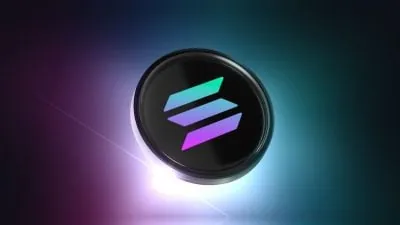
In a groundbreaking development for institutional blockchain adoption, JPMorgan has successfully completed a $50 million commercial paper issuance on the Solana network. This marks one of the first instances of a major Wall Street bank executing debt instruments on a public blockchain, setting a new precedent for the intersection of traditional finance and decentralized technology.
Transaction Details
The investment banking powerhouse orchestrated the debt issuance for Galaxy, utilizing USDC—a leading dollar-pegged stablecoin—for the entire settlement process. This approach signifies a marked departure from the traditional private or permissioned ledgers typically favored by institutional players.
The decision to utilize Solana as the underlying platform stands out, especially given that major financial institutions have historically gravitated towards private blockchain solutions or Ethereum networks for tokenized securities. This choice suggests an increasing institutional confidence in alternative layer-1 blockchains to handle substantial financial operations.
Implications for Institutional Adoption
This transaction signals a potential paradigm shift in how traditional financial institutions engage with blockchain technology. While banks have previously experimented with distributed ledger technology through closed-off networks, executing a commercial paper issuance on a public blockchain represents a robust commitment to on-chain infrastructure.
The use of USDC for settlement highlights the maturation of stablecoin infrastructure for institutional applications. By conducting the entire transaction in a digital dollar equivalent, JPMorgan and Galaxy effectively circumvented traditional settlement rails. This innovation may lead to reduced settlement times and decreased operational complexity.
Broader Market Context
The successful completion of this issuance could encourage other financial institutions to explore public blockchain networks for comparable transactions. It validates both the technical capacity and regulatory feasibility of conducting traditional financial operations on transparent, permissionless infrastructures.
For the blockchain industry, this development marks real progress in bridging legacy finance with decentralized systems. The transaction illustrates that public networks are capable of meeting the security, compliance, and performance requirements of institutional market participants engaged in legitimate financial operations.
Looking Ahead
JPMorgan's execution of this landmark transaction on Solana establishes a strong precedent for public-chain finance at the institutional level. As regulatory frameworks continue to evolve and blockchain infrastructure matures, we can anticipate that similar on-chain debt issuances may become increasingly commonplace, potentially revolutionizing how traditional securities are issued, traded, and settled.
Why It Matters
Traders
This transaction paves the way for other institutions to conduct operations on public blockchains, leading to increased liquidity and more opportunities for traders to engage with innovative financial products.
Investors
For long-term investors, this development signifies a validation of blockchain technology in mainstream finance, suggesting that the sector may see an expansive growth trajectory as traditional and decentralized finance converge.
Builders
Developers and builders should take note of this event, as it opens new avenues for developing financial products on public blockchains, demonstrating that traditional financial constructs can seamlessly integrate with innovative decentralized solutions.
This article is for information only and is not financial advice. Read the full disclaimer.