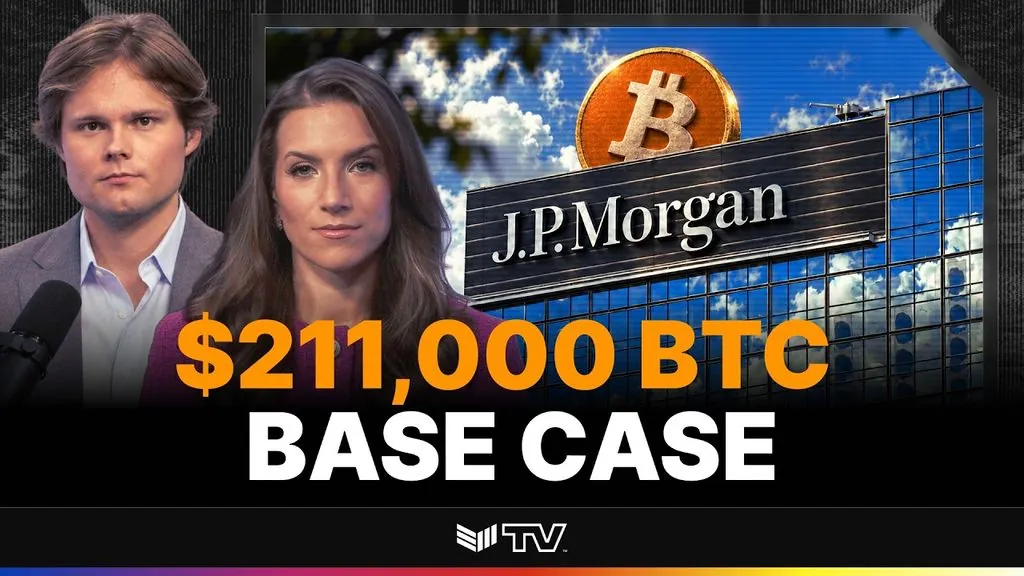
JPMorgan's Tokenized Dollars: A Bullish Shift for Wall Street's Blockchain Future
JPMorgan Chase is leading a transformative shift on Wall Street by implementing tokenized dollars on a public blockchain. This strategic move not only enhances transaction efficiency but also signals a broader acceptance of blockchain technology in mainstream finance.
Written by CoinArticle’s AI Newsroom · from 2 cited sources. How we work
JPMorgan's Tokenized Dollars: Wall Street's Quiet Blockchain Revolution
JPMorgan Chase, one of the world's most influential financial institutions, is fundamentally reshaping how money moves across Wall Street through its pioneering use of tokenized dollars on blockchain technology. This development marks a significant shift in how traditional finance is approaching digital asset infrastructure and represents a watershed moment for cryptocurrency integration into mainstream banking.
What We Know
According to reporting from both CoinDesk and BITRSS, JPMorgan has deployed tokenized dollars as part of its blockchain strategy. These digital representations of U.S. currency operate on distributed ledger technology, enabling faster and more efficient settlement of financial transactions.
The Wall Street titan's adoption of tokenized dollars is actively rewiring how major financial institutions move capital. Rather than relying solely on traditional banking infrastructure that requires multiple intermediaries and processing layers, JPMorgan's approach leverages blockchain to streamline these operations.
Perhaps most notably, JPMorgan has embraced a public blockchain for this initiative—a decision that observers view as a critical indicator of how traditional finance will evolve in coming years. This represents a meaningful departure from private blockchain experiments that dominated previous crypto-finance discussions.
Key Details
JPMorgan's tokenized dollar initiative operates at the intersection of traditional finance and blockchain technology. By converting dollars into digital tokens, the bank can settle transactions with unprecedented speed and transparency. The public blockchain approach means the infrastructure is accessible and verifiable by participants beyond JPMorgan's immediate control, introducing new levels of decentralization to Wall Street operations.
This development carries significant implications for how financial institutions handle inter-bank payments, settlements, and liquidity management. Rather than waiting days for transactions to clear through traditional systems, tokenized dollars enable near-instantaneous settlement with permanent, auditable records on the blockchain.
The broader market significance cannot be overstated. JPMorgan's move signals that institutional finance views blockchain technology not as a speculative asset class but as essential infrastructure for modern financial operations. When a traditionally conservative institution of JPMorgan's scale makes such commitments, it typically signals broader industry adoption trends.
Why This Matters
JPMorgan's tokenized dollar initiative demonstrates that blockchain technology has transcended its early status as a niche concern for cryptocurrency enthusiasts. The fact that America's largest bank—an institution with $3.7 trillion in assets—is quietly implementing public blockchain solutions suggests we're witnessing a fundamental restructuring of financial rails.
For cryptocurrency advocates, this represents validation that blockchain technology solves real problems for institutional finance. For traditional bankers, it acknowledges that distributed ledger technology offers operational advantages worth adopting.
The initiative also raises important questions about the future relationship between cryptocurrency infrastructure and traditional banking. As major institutions build on public blockchains, they're effectively endorsing the underlying technology while maintaining regulatory compliance and institutional safeguards.
This article is for information only and is not financial advice. Read the full disclaimer.