Pi Network Faces 1.21 Billion Token Unlock in 2026
Pi Network is scheduled to unlock approximately 1.21 billion PI tokens in 2026, coinciding with a period of historically weak token valuation. The timing raises questions about potential market absorption and price pressure.
Written by CoinArticle’s AI Newsroom · from 1 cited source. How we work
The 2026 Unlock Schedule
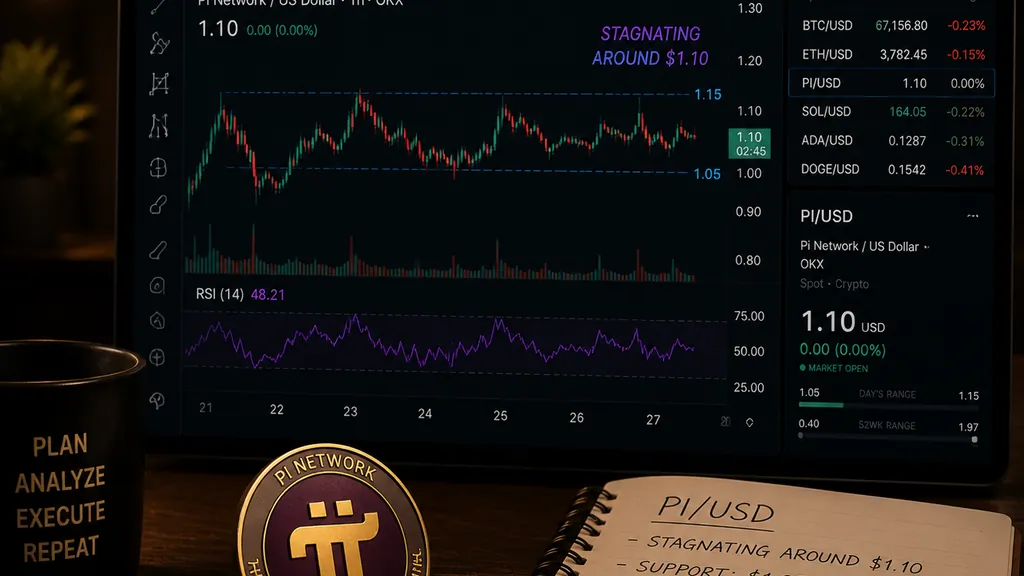
Pi Network's tokenomics roadmap includes a release of roughly 1.21 billion PI tokens in 2026, according to the project's unlock schedule. The timing places this significant supply addition at a point when PI has traded near all-time lows, making the influx potentially difficult for existing demand channels to absorb without downward price pressure.
Supply Absorption Concerns
Market participants are evaluating whether liquidity venues, merchant adoption, or speculative demand can sustain the token price during and after the unlock. Pi Network remains a closed mainnet with limited secondary market trading compared to fully public blockchains, which constrains the mechanisms typically available to absorb large supply additions. The project's ability to demonstrate utility growth—through expanded merchant partnerships or on-chain activity—will likely determine how effectively new circulating supply is digested.
Precedent from Other Networks
Historically, large token unlocks have correlated with sell pressure when they coincide with weak market conditions or low user demand. Projects that shipped substantial utility increases before supply events—such as increased staking yields, fee burn mechanisms, or ecosystem growth—have shown better price resilience than those that did not.
Why It Matters
For Traders
A 1.21 billion token unlock in 2026 could exert significant downward pressure; tracking Pi adoption metrics now helps gauge near-term price trajectory.
For Investors
Supply dilution of this magnitude without corresponding demand growth typically erodes token value; the project's ability to demonstrate utility before 2026 is critical.
For Builders
Ecosystem developers should assess whether Pi's merchant and dApp adoption pipeline can support increased circulating supply or if protocol-level burn mechanisms are needed.
This article is for information only and is not financial advice. Read the full disclaimer.