Pi Network Attempts Recovery Above $0.1500 Amid Token Unlocks
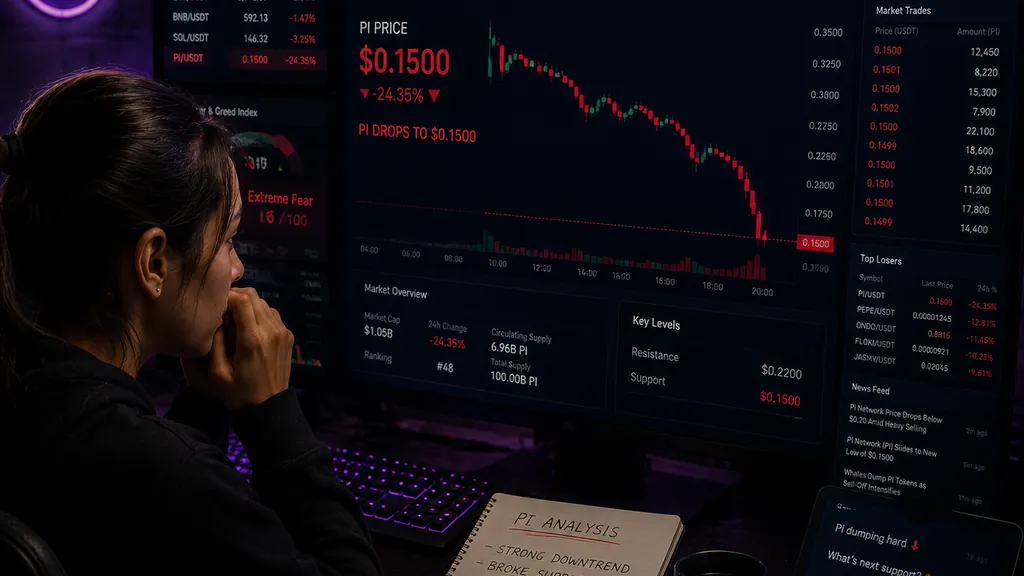
Pi Network rose nearly 2% as buyers attempt to push the token above $0.1500 resistance. Ongoing token unlocks remain a headwind that could limit upside momentum in the near term.
Written by CoinArticle’s AI Newsroom · from 1 cited source. How we work
Price Action and Resistance Level
PI rose approximately 2% in recent trading as bulls attempt to break through the $0.1500 level, according to the source material. The token has lagged most major cryptocurrencies recently, setting up the current recovery attempt against a backdrop of broader market conditions.
Token Unlock Pressure
The ongoing unlock schedule continues to weigh on Pi Network's price trajectory. Token releases from vesting schedules typically increase circulating supply and can create selling pressure as recipients liquidate holdings or rebalance positions. The magnitude and timing of these unlocks will likely determine whether bulls can sustain a push above $0.1500 or face renewed downside.
CEX Outflows as a Variable
CEX outflows—transfers of tokens from centralized exchanges to self-custody wallets—are cited in the source as a potential catalyst for recovery. Historically, large outflows can signal reduced selling pressure on exchange order books, though the net effect depends on whether withdrawn tokens are held long-term or moved to other venues for liquidation.
Why It Matters
For Traders
Resistance at $0.1500 is a defined liquidation level; a break above or rejection matters tactically for short-term positioning.
For Investors
Token unlock schedules are dilutive headwinds; structural overhang from vesting can persist regardless of short-term price moves.
For Builders
Token release mechanics affect incentive alignment; protocol teams should model long-term dilution impact on ecosystem participation.
This article is for information only and is not financial advice. Read the full disclaimer.