Class-Action Lawsuit Against Pump.fun Highlights MEV Trading Concerns
The class-action lawsuit against Pump.fun has been amended to include new evidence regarding maximal extractable value (MEV) trading practices, affecting retail traders on the Solana blockchain. Defendants include Solana Labs, the Solana Foundation, and Jito, as the case raises critical questions about the impact of MEV extraction on users.
Written by CoinArticle’s AI Newsroom · from 2 cited sources. How we work
MEV Trading Practices Return to Court in Pump.fun Class-Action Lawsuit
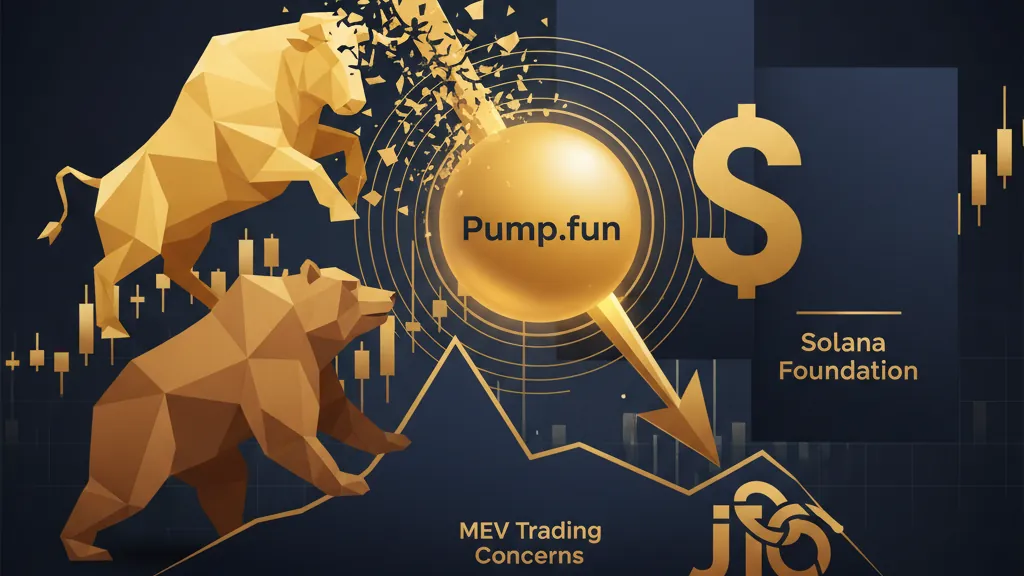
A significant legal development has emerged in the ongoing class-action lawsuit against Pump.fun, as amended filings now include new evidence surrounding maximal extractable value (MEV) trading practices. The lawsuit, which names Solana Labs, the Solana Foundation, and Jito as defendants alongside the memecoin launch platform, represents a critical moment in examining how MEV extraction impacts retail traders on the Solana blockchain.
What We Know
According to reporting from both Cointelegraph and BITRSS, the class-action lawsuit against Pump.fun and its associated parties has been formally amended to include previously unrevealed evidence pertaining to MEV trading practices. MEV—the value that can be extracted from blockchain transactions through strategic ordering and prioritization—has become a central issue in the legal proceedings.
The amended complaint specifically targets how MEV extraction has affected users of Pump.fun, the popular memecoin launch platform on Solana. By including new evidence in the court filing, plaintiffs' legal teams appear to have strengthened their position regarding allegations that MEV practices disadvantaged retail traders participating in token launches on the platform.
Key Details
The class-action suit consolidates allegations against multiple parties within the Solana ecosystem. Pump.fun operates as a decentralized platform for launching memecoins with minimal friction, while Jito, a prominent MEV infrastructure provider on Solana, has been included as a defendant due to its role in facilitating MEV extraction opportunities.
The amended filing suggests that evidence exists demonstrating systematic extraction of value from traders using Pump.fun. This could include documentation of frontrunning, sandwich attacks, or other MEV strategies that disproportionately harmed retail participants while benefiting sophisticated traders and MEV operators.
The inclusion of Solana Labs and the Solana Foundation in the lawsuit indicates that plaintiffs allege the broader Solana ecosystem—including its core developers and governing body—failed to implement adequate protections against MEV extraction or knowingly permitted practices that harmed users.
The timing of the amended filing reflects ongoing scrutiny of MEV practices across blockchain networks, with Solana facing particular attention due to its high transaction throughput and MEV-friendly architecture that has enabled aggressive extraction strategies.
Why This Matters
This legal development carries significant implications for the cryptocurrency industry. If the amended complaint successfully establishes liability, it could set a precedent for how platforms and infrastructure providers are held accountable for MEV extraction impacts on retail users.
For the Solana ecosystem specifically, the outcome could necessitate fundamental changes to how MEV is managed or distributed. Platform developers might be required to implement MEV-resistant mechanisms, share extraction profits with users, or establish explicit protections for retail traders.
The lawsuit also highlights broader concerns about fairness in decentralized finance. As MEV extraction has become increasingly sophisticated, questions persist about whether retail participants can compete fairly or whether blockchain systems inadvertently create two-tiered markets where informed, well-capitalized actors consistently profit at the expense of ordinary users.
Sources: Cointelegraph, BITRSS
This article is for information only and is not financial advice. Read the full disclaimer.