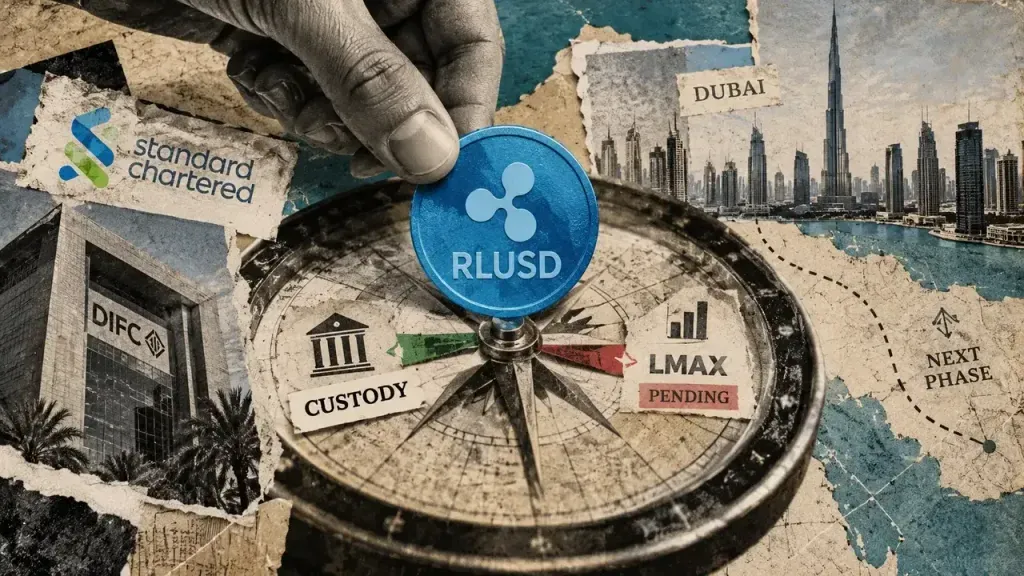
Stablecoins: A Revolutionary Force in Financial Infrastructure
Stablecoins are redefining the financial landscape as they emerge as a formidable alternative to traditional banking systems. With increasing institutional adoption and clearer regulatory frameworks, the future of transactions is shifting towards blockchain-based solutions.
Written by CoinArticle’s AI Newsroom · from 1 cited source. How we work
Stablecoins Challenge Traditional Financial Infrastructure
The financial landscape is undergoing a transformative shift as stablecoins rapidly gain traction against conventional banking systems and legacy payment networks. Industry leaders, including Ripple, are increasingly optimistic about this evolution, citing institutional adoption and recent regulatory developments as key drivers of growth.
Explosive Market Growth and Adoption
Stablecoins are positioning themselves as a dominant settlement layer in global finance, with industry projections indicating potential transaction volumes in the trillions. Currently experiencing explosive growth, the market is on a trajectory to achieve a trillion-dollar valuation as adoption accelerates across various sectors.
This unprecedented growth is fueled by a diverse array of participants. Institutions, governments, and enterprises are moving beyond pilot programs, actively implementing real-world applications of stablecoin technology. This shift represents a fundamental transition in how organizations perceive digital currencies—evolving from experimental tech to practical financial infrastructure.
Regulatory Clarity Supports Market Expansion
A pivotal factor enabling this rapid expansion is the emergence of regulatory clarity in key markets. As governments globally develop frameworks for stablecoin oversight, institutional apprehension is diminishing. This regulatory progress fosters an environment where traditional financial entities feel increasingly comfortable integrating stablecoins into their operations.
The convergence of regulatory certainty and technological maturity addresses long-standing concerns about consumer protection, financial stability, and compliance that have historically hindered broader adoption.
Implications for Traditional Finance
The rise of stablecoins presents significant challenges for traditional banking infrastructure. Legacy payment rails, which have long dominated cross-border transactions and settlements, are now contending with blockchain-based alternatives offering faster settlement times and lower costs.
Banks and payment processors must adapt to a landscape where stablecoins provide viable alternatives for transferring value across borders and between parties. This pressure compels traditional institutions to either embrace stablecoin technology or risk ceding market share to more nimble competitors.
Conclusion
The trajectory of the stablecoin sector suggests a fundamental restructuring of global payment infrastructure is underway. With institutional backing, active government participation, and regulatory frameworks taking form, stablecoins are transitioning from niche cryptocurrency products to mainstream financial instruments. The coming years will be pivotal in determining whether traditional rails can successfully integrate this innovative technology or if stablecoins will establish themselves as the preferred settlement layer for digital commerce.
Why It Matters
For Traders
Stablecoins offer a stable alternative for traders seeking to mitigate volatility within the cryptocurrency market while facilitating easy conversion between fiat and digital assets.
For Investors
Long-term investors should consider the growing institutional commitment to stablecoins as a signal of their potential to reshape the financial landscape, thereby offering new opportunities for growth and diversification.
For Builders
For developers and builders in the blockchain space, the increasing integration of stablecoins presents a fertile ground for innovation, with opportunities to create new applications and services that leverage their unique properties.
This article is for information only and is not financial advice. Read the full disclaimer.