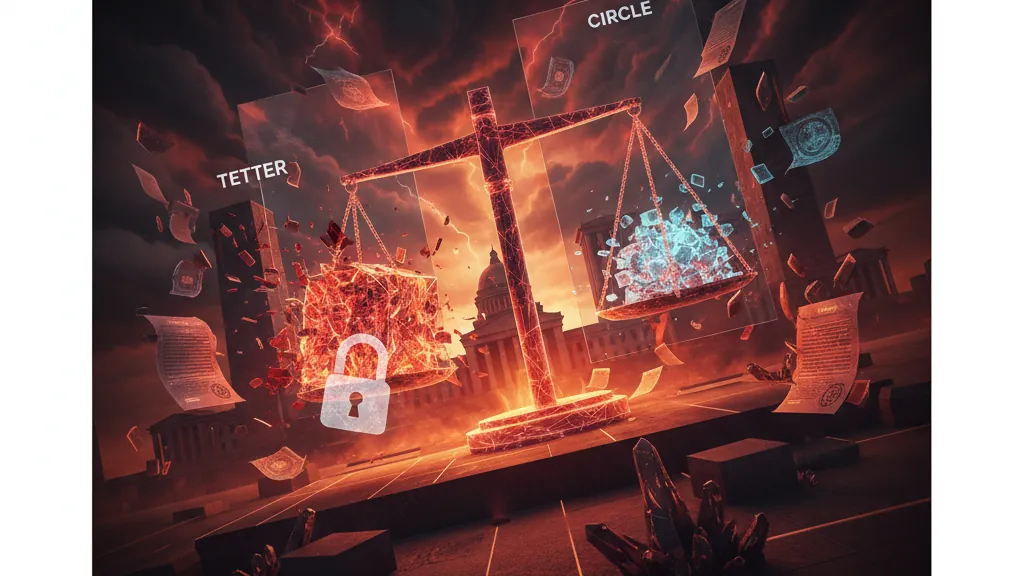
Tether vs. Circle: Heightened Scrutiny on Stablecoin Freezing Practices
As Tether freezes assets at a rate 30 times higher than Circle, the debate over centralization and regulatory oversight in the stablecoin market intensifies. What does this mean for the future of cryptocurrency in 2025?
Written by CoinArticle’s AI Newsroom · from 1 cited source. How we work
Key Takeaways
- 1Standardized protocols for asset freezing procedures
- 2Enhanced transparency requirements for blacklist operations
- 3Clearer legal frameworks governing the circumstances and methods of asset freezing
- 4Increased oversight of stablecoin issuers’ decision-making processes
Introduction
The stablecoin landscape is facing increased scrutiny as major issuers exert their power to freeze user assets. Recent data reveals that Tether has frozen approximately 30 times more stablecoin value compared to its primary competitor Circle, sparking renewed debates about centralization and regulatory oversight within the cryptocurrency ecosystem as we enter 2025.
The Freezing Discrepancy Between Major Issuers
Tether, the issuer of USDT—the world’s largest stablecoin by market capitalization—has significantly outpaced Circle’s USDC in the volume of frozen assets. This stark disparity highlights differing operational approaches between the two dominant stablecoin providers. While both companies have the technical capability to blacklist addresses and freeze funds, the scale at which Tether exercises this authority raises significant questions within the crypto community.
The freezing mechanism, integrated into these stablecoins’ smart contracts, allows issuers to render specific wallet addresses unable to transfer or receive tokens. Such actions are typically enacted in response to law enforcement requests, court orders, or suspicions of illicit activity, but the frequency at which Tether employs this power is particularly troubling.
Centralization Concerns in the Stablecoin Ecosystem
The notable increase in asset freezes has reignited fundamental concerns about centralization in what many users perceive as a decentralized financial system. Critics argue that the ability of a single entity to unilaterally freeze user funds contradicts core cryptocurrency principles of censorship resistance and financial sovereignty. This centralized control creates a paradox within the crypto space: while stablecoins aim to provide essential stability and fiat on-ramps for the broader ecosystem, they simultaneously introduce single points of failure and control that mirror traditional financial systems.
Regulatory Implications for 2025
These developments arrive at a critical juncture for stablecoin regulation on a global scale. Lawmakers and financial regulators are increasingly focused on establishing frameworks that address the operations of stablecoins, consumer protection, and systemic risk. The high volume of Tether’s asset freezes may significantly influence regulatory approaches, potentially leading to:
- Standardized protocols for asset freezing procedures
- Enhanced transparency requirements for blacklist operations
- Clearer legal frameworks governing the circumstances and methods of asset freezing
- Increased oversight of stablecoin issuers’ decision-making processes
Conclusion
As stablecoins continue to play a vital role in cryptocurrency markets, the tension between regulatory compliance and decentralization principles intensifies. The significant gap in frozen assets between Tether and Circle underscores the urgent need for industry-wide standards and transparent governance. For crypto users in 2025, these developments serve as a cautionary reminder of the trade-offs inherent in relying on centralized stablecoin infrastructure, even amidst the broader decentralized finance ecosystem.
Why It Matters
Traders
For traders, the escalating power of stablecoin issuers like Tether presents potential risks to liquidity and asset accessibility. Understanding the implications of freezing practices is crucial for risk management strategies.
Investors
Long-term investors should remain vigilant regarding the regulatory landscape shaping stablecoin operations. The outcome of regulatory frameworks could affect the stability and reliability of these assets in future market conditions.
Builders
Developers and builders in the blockchain space must consider the impact of centralized practices on the overall ecosystem. Exploring decentralized alternatives for stablecoins may pave the way for more resilient solutions that align with core cryptocurrency values.
This article is for information only and is not financial advice. Read the full disclaimer.