Is TRON's Network Growth Enough to Boost TRX Demand?
TRON's growing user adoption signifies its strength as a stablecoin settlement platform, yet TRX token demand remains stagnant. This article explores the implications of this disconnect and what it might mean for the future of TRON.
Written by CoinArticle’s AI Newsroom · from 1 cited source. How we work
TRON Network Growth Fails to Translate into TRX Token Demand
Network Adoption Surges Despite Token Stagnation
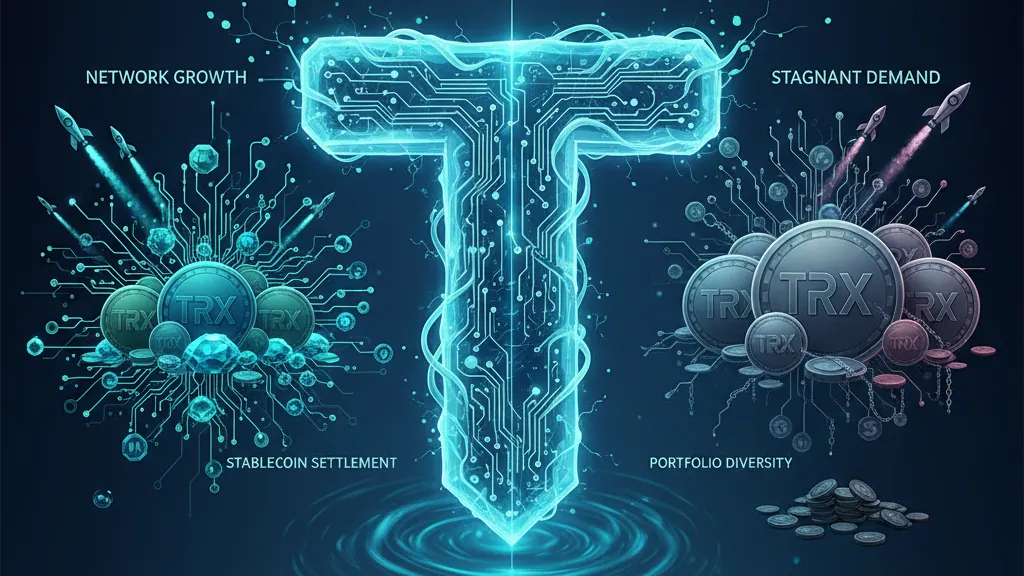
TRON has emerged as a leading blockchain network for stablecoin settlement, showcasing consistent growth in network activity and user adoption. Transaction volumes on the platform continue to rise, with stablecoin transfers accounting for a significant portion of network activity. However, this expansion has not resulted in a corresponding rise in demand for TRX, the network's native token, which has remained relatively flat in terms of market demand and price performance.
Stablecoin Settlement Drives TRON Preference
The preference for stablecoin settlement on TRON highlights the network's technical advantages, including low transaction fees and high throughput capacity. Users and institutions favor TRON for transferring value through stablecoins like USDT and USDC, capitalizing on these operational benefits. This consistent demand for stablecoin settlement has solidified TRON's position as a preferred infrastructure layer for value transfer, appealing to both institutional participants and retail users alike.
The TRX Disconnect Problem
Despite the network's increasing utilization, TRX token demand has not seen a proportional increase. This disconnect suggests that growing network activity does not automatically translate to demand for the native token. Many stablecoin transactions on TRON require minimal TRX holdings since transaction fees remain low and manageable. Consequently, users can engage in substantial settlement activity without the need to accumulate significant amounts of the token, limiting organic demand mechanisms.
Market Implications
This divergence raises critical questions about the relationship between network adoption and the value of the native token. The growth in TRON's ecosystem demonstrates the network's utility for specific use cases, while the stagnation of TRX performance suggests that market participants may not regard network adoption alone as a primary driver of the token's value.
Conclusion
TRON's position as a preferred stablecoin settlement network remains robust, with continued network expansion likely. However, the disconnect between rising network activity and TRX token demand highlights a fundamental challenge: widespread blockchain utilization does not guarantee appreciation of the native token. Whether this gap reflects temporary market conditions or structural limitations will be important to monitor in the coming months as the ecosystem continues to evolve.
Why It Matters
For Traders
Understanding the disconnect between network growth and TRX demand can provide insights into potential trading strategies.
For Investors
Investors should consider the implications of TRON's ecosystem growth versus TRX's stagnant performance in their investment decisions.
For Builders
Developers should explore innovative use cases that could increase TRX utility and, in turn, drive demand.
This article is for information only and is not financial advice. Read the full disclaimer.