Uniswap's UNIfication Proposal: A Game-Changer for Tokenomics
Uniswap's successful UNIfication proposal introduces a deflationary model, reshaping its tokenomics and promising a sustainable economic future for the UNI token. With 99.9% community approval, this landmark decision reflects a strong consensus among holders.
Written by CoinArticle’s AI Newsroom · from 1 cited source. How we work
Overwhelming Community Support Drives Major Protocol Change
Uniswap, one of the largest decentralized exchanges in the cryptocurrency ecosystem, has successfully implemented the UNIfication proposal, signaling a monumental shift in its tokenomics. Garnering an extraordinary 99.9% approval rate from community voters, this governance initiative introduces a deflationary economic model aimed at decreasing the circulating supply of UNI tokens over time.
Mechanics of the New Deflationary Model
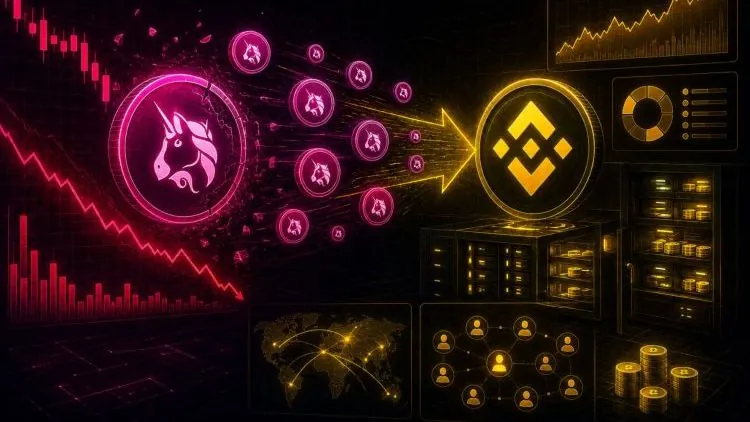
Under this newly adopted framework, a portion of transaction fees generated on the Uniswap protocol will be allocated to burn UNI tokens, effectively removing them from circulation. This mechanism marks a significant departure from the protocol's previous economic structure, establishing a direct correlation between platform usage and token supply reduction.
The deflationary model seeks to exert sustained downward pressure on UNI's total supply as trading activity flourishes on the decentralized exchange. With every transaction processed through Uniswap now contributing to the token burn, there is a direct linkage between the utility of the protocol and its economic health.
Implications for the Ecosystem
The UNIfication implementation represents a strategic advancement in how decentralized finance (DeFi) protocols can enhance token value accrual. By introducing token burns that are fueled by organic protocol revenue, Uniswap has established a model where increased platform usage drives token supply dynamics.
The overwhelming community support reflects a robust alignment between UNI token holders and the proposed economic restructuring, a feat that is relatively uncommon in decentralized governance systems, where proposals often experience divided voting outcomes.
Looking Forward
With the successful execution of UNIfication, Uniswap positions itself alongside other forward-thinking protocols that have integrated deflationary mechanisms into their economic frameworks. The long-term impact of this model will hinge on the maintenance of trading volume across the platform and the rate at which tokens are withdrawn from circulation in comparison to any new emissions or unlocks.
As a foundational pillar in the DeFi landscape, Uniswap's move may serve as a beacon for other projects contemplating similar tokenomics innovations. The months ahead will be pivotal as data on the burn rate and its correlation to platform activity begin to emerge, offering valuable insights into the efficacy of fee-funded deflationary strategies within decentralized exchange ecosystems.
Why It Matters
For Traders:
The introduction of a deflationary model through token burning is expected to enhance the scarcity of UNI tokens, potentially driving their value higher over time. Traders should monitor trading volumes closely, as increased usage may lead to greater token burns.
For Investors:
Long-term investors in UNI may find this economic restructuring encouraging, as the deflationary model aims to increase value appreciation through reduced supply. Strategic positioning may yield significant returns as Uniswap continues to evolve.
For Builders:
Developers and builders can draw insights from Uniswap's approach to creating a sustainable economic model. The success of fee-funded token burns may inspire the design of innovative tokenomics for future projects in the DeFi space.
This article is for information only and is not financial advice. Read the full disclaimer.