US Regulators Seek Indirect Control Over Offshore Crypto Casinos
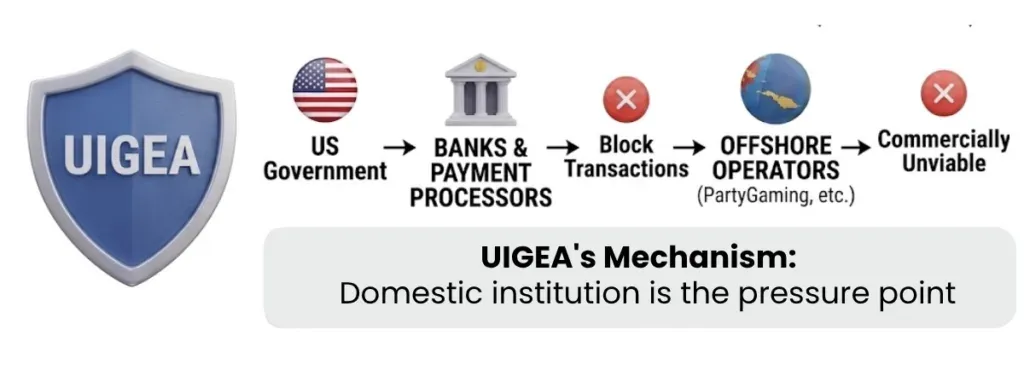
US regulators lack direct authority to ban offshore cryptocurrency gambling platforms but are pursuing indirect enforcement strategies to limit their reach. These approaches target payment flows, custody providers, and marketing channels rather than the platforms themselves.
Key Takeaways
- 1## The Jurisdictional Challenge The US cannot directly prohibit offshore crypto casinos because they operate outside US territory and regulatory reach.
- 2A foreign-based gambling platform accepting crypto deposits from US users falls into a legal gray zone: the platform violates no US law by its mere existence, and crypto's pseudonymous nature makes enforcement against individual users impractical at scale.
- 3## Enforcement Workarounds in Development Regulators are instead pursuing indirect methods to curtail offshore crypto gambling.
- 4These include targeting stablecoin issuers and custodians who service deposits, blocking payment rails that funnel US dollars to gaming platforms, and issuing guidance that discourages exchanges from facilitating transactions to known offshore casinos.
- 5The Financial Crimes Enforcement Network (FinCEN) has also increased scrutiny of wallet movements flagged as casino-linked, adding friction to the user experience.
The Jurisdictional Challenge
The US cannot directly prohibit offshore crypto casinos because they operate outside US territory and regulatory reach. A foreign-based gambling platform accepting crypto deposits from US users falls into a legal gray zone: the platform violates no US law by its mere existence, and crypto's pseudonymous nature makes enforcement against individual users impractical at scale.
Enforcement Workarounds in Development
Regulators are instead pursuing indirect methods to curtail offshore crypto gambling. These include targeting stablecoin issuers and custodians who service deposits, blocking payment rails that funnel US dollars to gaming platforms, and issuing guidance that discourages exchanges from facilitating transactions to known offshore casinos. The Financial Crimes Enforcement Network (FinCEN) has also increased scrutiny of wallet movements flagged as casino-linked, adding friction to the user experience.
Broader Policy Friction
The difficulty in controlling offshore gambling reflects a structural tension in crypto regulation: the US government wants to prevent financial harms to citizens while lacking the jurisdictional tools to regulate foreign entities directly. Congressional proposals to tighten rules on offshore gaming remain stalled, and existing anti-money-laundering frameworks were designed for traditional banking, where intermediaries are regulated domestic entities. Crypto's architecture — peer-to-peer settlement without mandatory custodians — sidesteps these traditional control points.
Why It Matters
For Traders
Expect continued friction on stablecoin and exchange deposit flows; platforms used to fund offshore gambling may face payment restrictions or custody freezes without direct offshore bans.
For Investors
Regulatory uncertainty around offshore crypto gambling creates reputational risk for stablecoin issuers and exchanges that service these platforms, potentially affecting their institutional adoption and compliance posture.
For Builders
Protocol teams should anticipate that jurisdictional enforcement gaps may push regulators toward custody-level compliance mandates and on-chain transaction monitoring that affect all platforms, not just gaming.