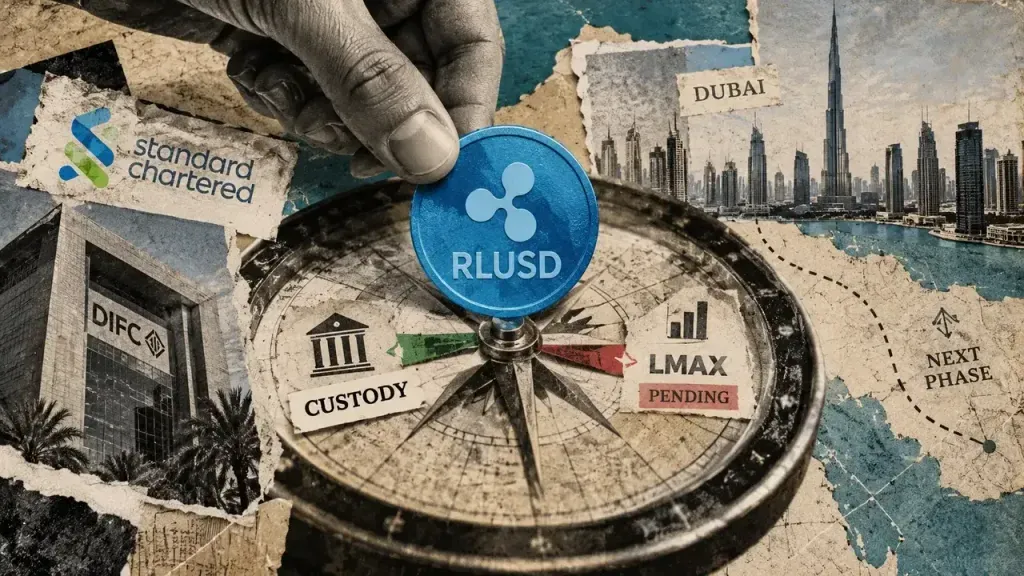
Analyst Questions What Drives XRP Demand in a Global Settlement System
Crypto analyst Iso Ledger raised a question about XRP's core demand driver if the XRP Ledger achieved widespread adoption for payments. The analyst argues demand stems not from gas fees but from XRP's role as a liquidity bridge between currency pairs lacking direct trading pairs.
Written by CoinArticle’s AI Newsroom · from 1 cited source. How we work
The Core Question
Crypto analyst Iso Ledger posed a question in an X post on May 7, 2026, about XRP's demand mechanics in a hypothetical scenario where the XRP Ledger became the dominant settlement layer globally and transactions settled in RLUSD stablecoin. If XRP primarily functioned as a gas token in that environment, Ledger argued, what mechanism would create sustained demand for the asset beyond transaction fees?
The Bridging Thesis
Ledger's answer centers on XRP's use as a liquidity bridge between currency pairs without direct trading liquidity. In the example provided, a Japanese pension fund paying a Brazilian supplier would route value through XRP when no direct trading pair exists between OUSG and a BRL stablecoin. Under this model, XRP functions as a neutral settlement asset enabling transactions across disconnected markets rather than simply as a transaction fee mechanism.
Implications for XRPL Adoption
The framing shifts the question from "How many transactions occur on XRPL?" to "How much cross-currency liquidity routing needs to occur?" If widespread XRPL adoption requires frequent settlement between disparate currency zones, demand for XRP as an intermediate asset could remain material even if transaction fees alone would not support the asset's current valuation. The analyst's position suggests XRP's long-term demand case depends on institutional adoption of cross-border payment corridors rather than retail transaction volume.
Why It Matters
For Traders
The debate does not change near-term price mechanics but frames XRP's value proposition around cross-border corridors rather than transaction volume.
For Investors
Understanding XRP's demand case requires evaluating institutional payment adoption and multi-currency liquidity structures, not just transaction throughput.
For Builders
XRPL infrastructure developers should prioritize liquidity bridge mechanics and cross-currency routing if the analyst's thesis about demand drivers is correct.
This article is for information only and is not financial advice. Read the full disclaimer.