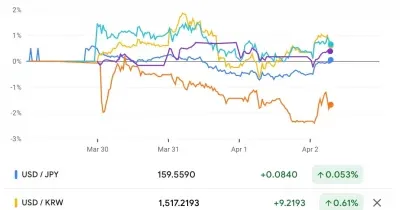
Asian Currencies Weaken Against Dollar as Oil Prices Rise
Asian currencies depreciated against the US dollar as rising oil prices and elevated US Treasury yields pressured regional economies. Central banks face headwinds in stabilizing exchange rates amid inflationary pressures.
Written by CoinArticle’s AI Newsroom · from 1 cited source. How we work
Oil and Rates Drive Currency Weakness
Asian currencies weakened against the dollar as oil prices climbed and US yields rose, creating dual pressure on regional exchange rates. The combination tightens financial conditions for oil-importing economies across Southeast Asia, South Asia, and East Asia, raising the cost of energy imports priced in dollars.
Central Bank Challenge
Regional central banks face mounting difficulty stabilizing their currencies as imported inflation risks intensify. Higher oil costs feed through to consumer prices, potentially forcing tighter monetary policy at a moment when depreciating currencies are already raising import prices. The dynamic constrains policy flexibility at a time when growth is already moderating across the region.
Crypto Markets and Broader Context
The weakening of Asian currencies against the dollar has secondary effects on cryptocurrency adoption and stablecoin demand in the region. As local currencies depreciate, demand for USD-pegged stablecoins often rises among traders and investors seeking to hedge currency risk, though this source material does not quantify those flows directly.
Why It Matters
For Traders
Currency weakness and rising oil costs may increase stablecoin trading volume in Asian markets as hedging demand rises, though broader macro dynamics dominate near-term price action.
For Investors
Persistent currency depreciation across Asia could accelerate institutional adoption of dollar-pegged stablecoins as reserve assets, shifting allocation patterns in the region.
For Builders
Regional stablecoin projects and cross-border payment protocols should monitor depreciation cycles, as currency volatility directly affects user demand for non-local-currency denomination products.
This article is for information only and is not financial advice. Read the full disclaimer.