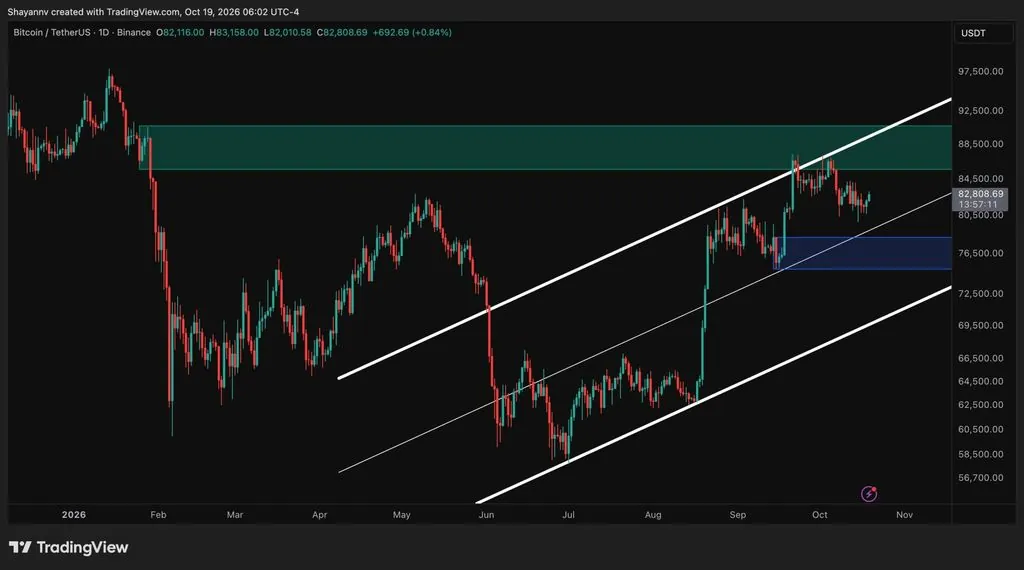
Bitcoin Falls to $79K Amid US Airstrikes on Iranian Military Site
Bitcoin declined to $79,000 as the US conducted airstrikes on an Iranian military installation near the Strait of Hormuz. The move underscores crypto's sensitivity to geopolitical events and potential shifts in cross-border financial flows.
Written by CoinArticle’s AI Newsroom · from 1 cited source. How we work
Price Movement and Timing
Bitcoin fell to $79,000 on Tuesday, a decline of roughly 6% from its recent range near $84,000. The selloff coincided with reports of US military action targeting an Iranian military site near the Strait of Hormuz, a critical global chokepoint for oil shipments. Bitcoin had been trading in a relatively tight band over the prior week before the sharp intraday drop.
Geopolitical Context and Market Reaction
Escalations in Middle East tensions have historically prompted risk-off behavior across equity and crypto markets. Traders cited uncertainty around potential retaliatory moves and broader geopolitical instability as reasons for the decline. Stablecoin volumes on major exchanges rose during the session, suggesting some investors moved capital to sidelines rather than exiting crypto entirely.
Longer-Term Implications
The incident renews discussion about cryptocurrency's role in conflict zones and cross-border payments during periods of international instability. Some analysts note that blockchain systems could become more relevant if traditional financial channels face disruption, though this remains speculative. Regulatory scrutiny around sanctions evasion has also intensified in past geopolitical crises, potentially affecting crypto custody and exchange policies.
Why It Matters
For Traders
Bitcoin's 6% drop on geopolitical news signals renewed correlation with macro risk-off events; key support levels warrant monitoring if tensions escalate further.
For Investors
Recurring crypto selloffs during geopolitical crises suggest Bitcoin has not yet decoupled from traditional risk-off flows, a factor for long-horizon portfolio construction.
For Builders
Cross-border payments infrastructure faces renewed scrutiny during sanctions events; protocols emphasizing privacy or permissionlessness may face regulatory headwinds in coming months.
This article is for information only and is not financial advice. Read the full disclaimer.