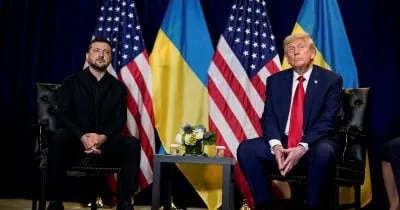
Trump's Ukraine Shift Revives Debate on Crypto's Role in Wartime Finance
Former President Trump adjusted his public position on Ukraine after reviewing intelligence on recent drone strikes, reigniting discussion about cryptocurrency's use in funding military operations and cross-border transfers outside traditional banking channels. The debate highlights regulatory uncertainty around crypto's application in geopolitical conflict.
Written by CoinArticle’s AI Newsroom · from 1 cited source. How we work
Trump's Policy Adjustment
Donald Trump modified his rhetorical stance on Ukraine following a briefing on drone strike intelligence, according to reporting from Crypto Briefing. The shift signals evolving calculations within his policy framework, though the specific details of the intelligence reviewed remain undisclosed. Trump's prior statements on Ukraine have drawn scrutiny from both foreign policy analysts and cryptocurrency advocates watching for signals on how a potential future administration might treat digital assets in wartime contexts.
Crypto's Wartime Application Back Under Scrutiny
Trump's repositioning has renewed focus on cryptocurrency's use in funding military operations and circumventing traditional financial sanctions. Ukraine's government has publicly solicited donations in Bitcoin and other cryptocurrencies to support its defense, and researchers have documented significant on-chain transfers to Ukrainian military and civilian aid organizations. Regulators and policymakers face mounting pressure to clarify whether such transfers constitute sanctions evasion, humanitarian aid facilitation, or a separate category requiring new rules.
Regulatory and Ethical Questions Persist
The debate cuts across competing interests: humanitarian groups argue crypto enables aid delivery when traditional banking channels are compromised or slow; regulators worry about tracking and controlling funds in conflict zones; and geopolitical observers question whether crypto's borderless nature fundamentally changes the tools available to sanctioning powers. No comprehensive U.S. or international framework currently governs cryptocurrency transfers in active conflicts, leaving both donors and platforms in legal gray zones.
Why It Matters
For Traders
Regulatory clarity on crypto in conflict financing could shift sentiment around geopolitical-sensitive altcoins; watch for policy signals in coming weeks.
For Investors
Persistent ambiguity on wartime crypto use may accelerate regulatory codification, affecting how institutional capital views crypto's role in cross-border settlement.
For Builders
Stablecoin and Layer 2 projects should monitor emerging frameworks on sanctions compliance and transaction filtering in conflict-zone use cases.
This article is for information only and is not financial advice. Read the full disclaimer.