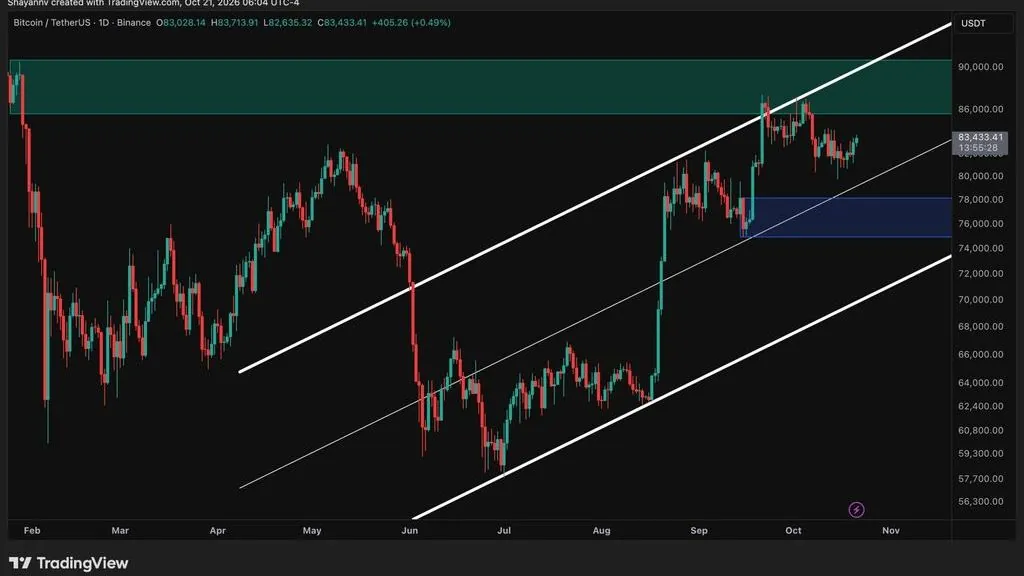
Bitcoin Price Dips: Shorting Surge Sparks Market Concerns
Bitcoin's recent downturn is attributed to failed diplomacy leading to increased shorting activity. As the cryptocurrency approaches the pivotal $70,000 mark, traders and investors are bracing for potential further declines.
Written by CoinArticle’s AI Newsroom · from 1 cited source. How we work
Bitcoin Slides As Failed Diplomacy Sparks Wave Of Shorting Activity
Bitcoin's price is experiencing a notable downturn, reminiscent of the market fluctuations seen in earlier months. Recent events, particularly disappointing diplomatic efforts in key global negotiations, have ignited a wave of shorting activity among traders. This intensified bearish sentiment comes as Bitcoin’s price gradually slides back toward the critical $70,000 level, raising concerns among both investors and analysts.
Market Overview
After months of bullish momentum, the cryptocurrency market finds itself grappling with a significant shift in sentiment. Traders who recently positioned themselves long are now facing headwinds as the market reacts to a combination of macroeconomic and political events. Increased selling pressure, driven by both retail and institutional participants, is adding downward momentum to Bitcoin's price.
Market analysts suggest that the failed diplomatic attempts, which many had hoped would provide a more stable economic environment, have left investors on edge. With heightened uncertainty in global markets, traders are increasingly opting for short positions, expecting further declines. This trend is likely to persist unless a bullish catalyst emerges to shift the current narrative.
Why It Matters
For Traders
For traders, the current environment presents both challenges and opportunities. The increase in shorting activity indicates a significant change in market psychology, suggesting that traders should remain vigilant. Those who have shorted Bitcoin may find increased profit opportunities in the near term, but caution is warranted, as market conditions can change swiftly. Identifying key resistance levels and indicators will be important for traders looking to navigate this volatile climate.
For Investors
Investors are likewise feeling the impact of Bitcoin's price slide. The retraction toward the $70,000 level could offer potential entry points for those looking to buy the dip. However, the overall bearish trend underscores the necessity for due diligence and a long-term perspective. Investors should remain aware of macroeconomic indicators and potential political developments that could further influence Bitcoin's trajectory in the coming weeks.
For Builders
For builders in the cryptocurrency space, the current market dynamic emphasizes the importance of resilience and adaptability. It is during periods of uncertainty that innovative projects can emerge, offering new solutions or improvements on existing models. The ongoing evolution of the cryptocurrency landscape may lead to new opportunities for network growth and collaboration, underscoring the need for continued investment in technology and infrastructure to weather these market fluctuations.
In conclusion, Bitcoin's recent slide serves as a reminder of the interconnectedness of policy decisions, market sentiment, and price movements. Traders, investors, and builders alike will need to navigate this challenging environment with a keen eye on both technical signals and broader economic indicators.
This article is for information only and is not financial advice. Read the full disclaimer.