Brazilian Police Raid Reveals Gang-Run Crypto Mining Operation Powered by Stolen Electricity
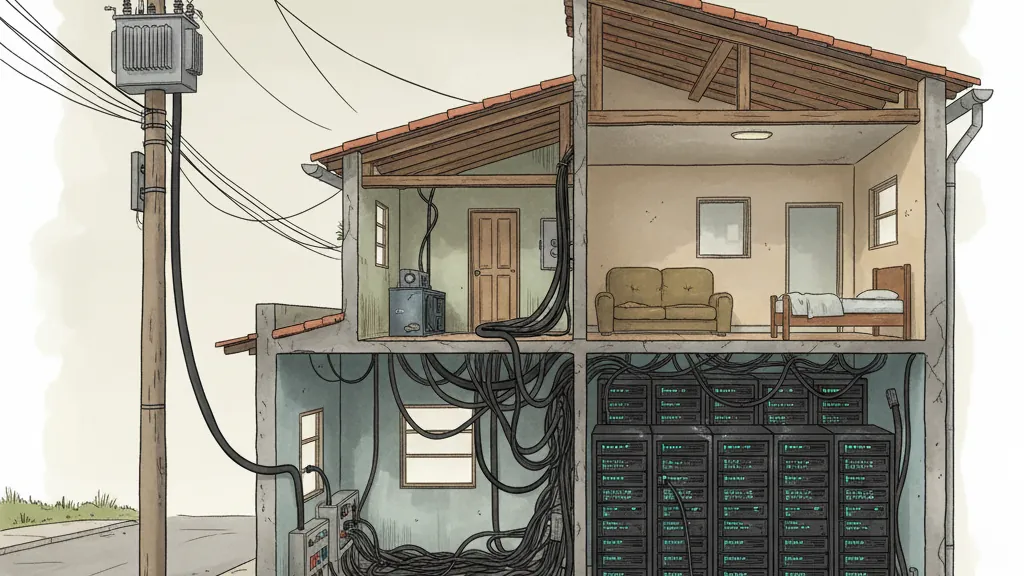
Rio de Janeiro Civil Police discovered a 30-computer crypto mining farm operated by Comando Vermelho that drew power from an illegal electrical connection tapped directly from a utility pole. The operation illustrates a growing criminal model that converts stolen infrastructure into digital asset revenue.
Written by CoinArticle’s AI Newsroom · from 1 cited source. How we work
The Operation
Rio de Janeiro Civil Police discovered a cryptocurrency mining setup operated by Comando Vermelho, a major Brazilian criminal organization, during a raid on an abandoned lot in the city. The farm consisted of roughly 30 computers arranged on shelves in a single room, each equipped with high-capacity cooling fans typical of mining hardware under sustained computational load.
The operation relied entirely on power sourced from a clandestine electrical connection running directly from a nearby utility pole, bypassing official meter infrastructure and avoiding any utility billing. Police did not disclose the amount of electricity diverted or the estimated value of hardware recovered.
Crime Model and Scale
The setup exemplifies a hybrid revenue strategy where organized crime groups reduce operational costs by stealing critical infrastructure—in this case, electrical supply—and converting it into cryptocurrency mining proceeds. By eliminating the largest operating expense for a mining farm, the group could operate profitably even at lower hash rates or during periods of unfavorable mining economics.
The incident is part of a broader pattern of cryptocurrency-related criminal activity in Brazil. Earlier enforcement actions have targeted exchanges operating without proper licensing and crypto theft networks, but this operation stands out for its direct infrastructure theft component. No details on what cryptocurrencies the farm mined or the duration of operations were disclosed.
Why It Matters
For Traders
Mining operations powered by stolen infrastructure create unaccounted-for hashrate that may distort difficulty retargeting and supply assumptions in markets with significant geographical concentration.
For Investors
Organized crime's adoption of cryptocurrency mining as a theft-monetization vector signals broader criminal infrastructure adaptation and may increase regulatory scrutiny of mining operations in emerging markets.
For Builders
Mining pool operators and on-chain analytics firms may need to develop methods to identify and flag hashrate sources tied to criminal activity or infrastructure theft in jurisdictions with weak electrical grid security.
This article is for information only and is not financial advice. Read the full disclaimer.