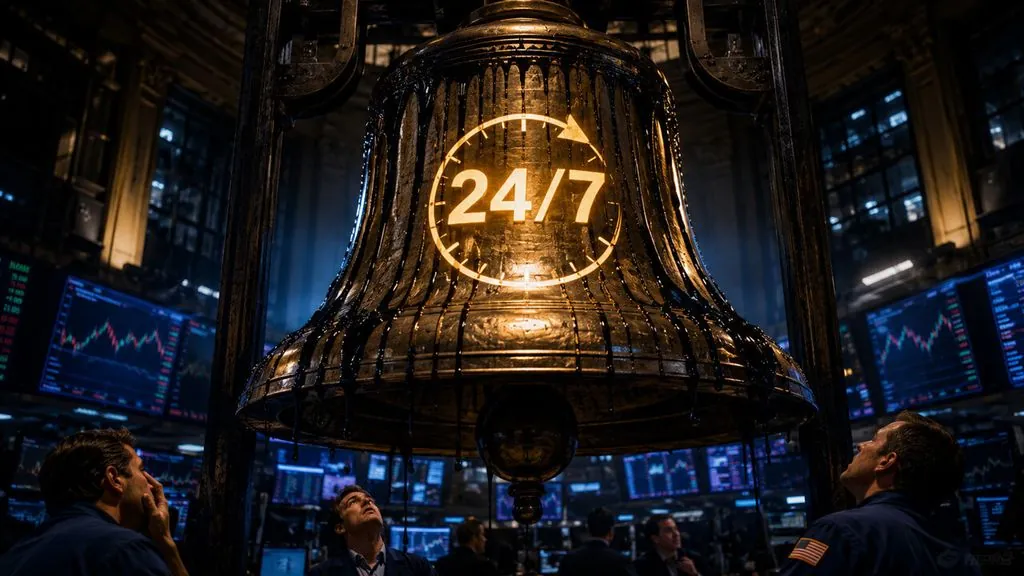
CME Plans 24/7 Crypto Futures Trading Starting May 29
CME Group will launch around-the-clock cryptocurrency futures and options trading on May 29, expanding a product line that generated $3 trillion in notional volume in 2025. The move signals traditional finance's push into continuous markets as decentralized platforms like Hyperliquid scale.
Written by CoinArticle’s AI Newsroom · from 1 cited source. How we work
CME's Expansion into Continuous Trading
CME Group announced plans to move its cryptocurrency futures and options to 24/7 trading starting May 29. The product line posted $3 trillion in notional volume during 2025 and is currently tracking 46% above that pace year-to-date, according to CME data. The shift to continuous trading removes the current gap between session closures, aligning CME's crypto offering with the non-stop markets that already dominate decentralized exchanges.
Competitive Pressure from Decentralized Markets
The expansion reflects growing competition from platforms like Hyperliquid, which operates without trading halts or session boundaries. CME's move to continuous hours suggests traditional finance venues are responding to user demand for markets that never close. ICE's New York Stock Exchange is separately developing a tokenized securities platform designed for 24/7 operations and instant settlement, indicating a broader Wall Street shift toward matching decentralized finance workflows.
Market Structure Implications
The shift to round-the-clock trading could reshape how institutional traders and retail users allocate volume between centralized and decentralized venues. CME's existing scale and regulatory standing give it structural advantages in attracting institutional flow, but continuous operation removes one of the remaining friction points that pushed users toward decentralized alternatives. Whether traditional market infrastructure can replicate the speed and cost profile of decentralized platforms remains an open question for market participants.
Why It Matters
For Traders
Crypto traders will have institutional-grade CME liquidity available outside current session windows, potentially reducing slippage during off-hours relative to decentralized venues.
For Investors
Traditional finance's move to continuous markets signals institutional adoption is accelerating; sustained 46% YoY volume growth in CME crypto products reflects structural demand.
For Builders
Decentralized exchange protocols face renewed competitive pressure from regulated incumbents upgrading infrastructure; the feature gap between CeFi and DeFi is narrowing.
This article is for information only and is not financial advice. Read the full disclaimer.