G-7 Finance Ministers Weigh Global Growth Imbalances Amid Trade Tensions
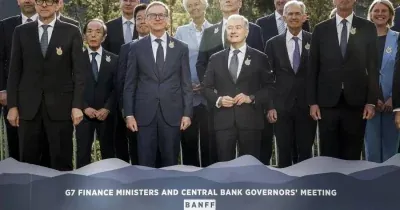
G-7 finance ministers convened to discuss persistent global growth imbalances in the wake of trade discussions between the U.S. and China. The focus on international economic coordination underscores mounting tensions over trade policy and capital flows.
Written by CoinArticle’s AI Newsroom · from 1 cited source. How we work
G-7 Coordination on Economic Imbalances
G-7 finance ministers met to address structural imbalances in global growth, reflecting heightened concern over trade friction and its spillover effects on currency markets and cross-border capital deployment. The gathering followed recent high-level U.S.-China trade discussions, signaling that major economies are reassessing their approach to managing international economic relationships amid policy uncertainty.
Market and Investment Implications
Growing trade tensions between the world's two largest economies have historically created volatility in crypto and traditional asset markets. Shifts in trade policy, tariff regimes, and capital controls can influence how investors position across geographies and asset classes, including digital assets that trade on global exchanges with minimal geographic restriction.
Why This Matters for Crypto Markets
Broad-based trade friction and monetary policy divergence among G-7 nations can affect stablecoin demand, cross-border settlement patterns, and the relative attractiveness of decentralized finance as an alternative to traditional international payment rails. Regulatory attention to crypto's role in global finance often intensifies during periods of trade and currency instability.
Why It Matters
For Traders
Trade policy uncertainty typically widens bid-ask spreads and increases intraday volatility across risk assets; monitor stablecoin premiums on offshore exchanges.
For Investors
Prolonged trade friction and policy divergence may accelerate adoption of decentralized cross-border settlement infrastructure as traditional channels face sanctions or capital controls.
For Builders
G-7 scrutiny of international payment flows and cross-border capital movement will likely trigger increased compliance requirements for bridge protocols and cross-chain bridges.
This article is for information only and is not financial advice. Read the full disclaimer.