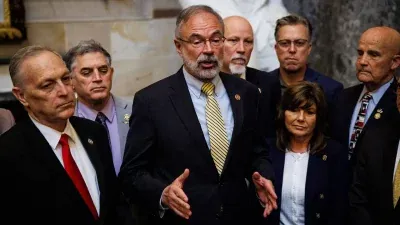
House Freedom Caucus Escalates CBDC Ban Push as FISA Deadline Nears
The House Freedom Caucus is intensifying efforts to block central bank digital currency development as a FISA reauthorization deadline approaches. The group cites privacy concerns as the primary driver of its opposition to CBDC initiatives.
Written by CoinArticle’s AI Newsroom · from 1 cited source. How we work
Political Timing and CBDC Opposition
The House Freedom Caucus is pressing forward with legislation to ban central bank digital currencies, timing its push to coincide with upcoming FISA reauthorization debates. The group frames CBDCs as a threat to financial privacy, arguing that a government-issued digital currency could enable unprecedented surveillance of individual transactions.
Privacy Concerns Driving Opposition
Members of the caucus contend that CBDCs would create a single point of control over all monetary transfers, potentially allowing federal authorities to monitor or restrict spending patterns. This concern aligns with broader conservative skepticism toward digital payment systems that lack intermediaries or anonymity protections. The framing positions opposition to CBDCs within the larger debate over surveillance authorities, linking financial privacy to civil liberties arguments.
Implications for Digital Currency Development
The escalation could complicate the Federal Reserve's ongoing exploration of digital dollar architecture. While the Fed has stated no decision has been made on CBDC issuance, heightened congressional opposition may constrain its technical development timelines or require explicit legislative authorization before any deployment. Private digital currencies and stablecoins may see increased interest from users and developers seeking alternatives to systems perceived as surveillance-vulnerable.
Why It Matters
For Traders
CBDC regulatory headwinds could redirect institutional and retail capital flows toward decentralized alternatives and privacy-focused tokens over the next legislative session.
For Investors
Congressional opposition to CBDCs signals a structural shift in U.S. digital money policy toward private and decentralized models, reshaping the competitive landscape for stablecoins.
For Builders
Privacy and censorship-resistance become higher-stakes differentiators as regulatory frameworks narrow the scope for government-backed digital currencies.
This article is for information only and is not financial advice. Read the full disclaimer.