Iran Strait of Hormuz: Oil Markets Face Geopolitical Risk
Iran declares the Strait of Hormuz will not return to normal operations amid US tensions, threatening the 21% of global petroleum trade flowing through this critical chokepoint daily. The standoff raises crude oil prices, shipping costs, and geopolitical risk premiums across energy and commodity markets worldwide.
Key Takeaways
- 1# Iran Says Strait of Hormuz Will Not Return to Previous State Amid US Distrust ## Strategic Waters in Flux Iran has declared that the Strait of Hormuz—one of the world's most critical maritime chokepoints—will not revert to its previous operational state, citing ongoing tensions and distrust with the United States.
- 2The statement signals a significant shift in the geopolitical landscape surrounding this vital waterway, through which approximately **21% of global petroleum trade** flows annually.
- 3Iranian officials have emphasized that security arrangements and regional dynamics have fundamentally changed.
- 4This declaration comes amid escalating US-Iran relations, which have created an environment of heightened uncertainty regarding maritime commerce in the Persian Gulf region.
- 5The rhetoric suggests that any normalization of conditions would require substantial diplomatic progress—a development that appears unlikely in the near term.
Iran Says Strait of Hormuz Will Not Return to Previous State Amid US Distrust
Strategic Waters in Flux
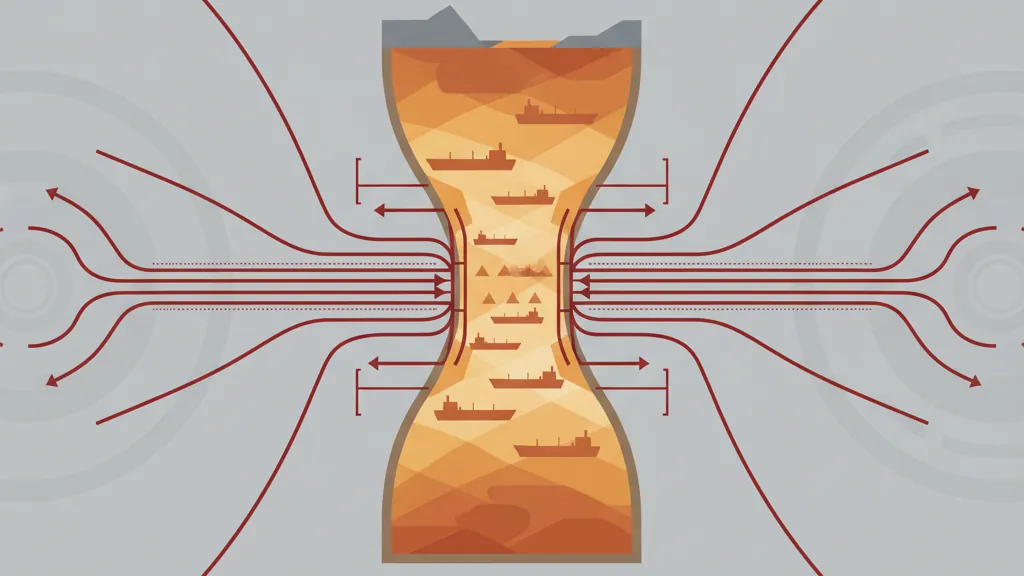
Iran has declared that the Strait of Hormuz—one of the world's most critical maritime chokepoints—will not revert to its previous operational state, citing ongoing tensions and distrust with the United States. The statement signals a significant shift in the geopolitical landscape surrounding this vital waterway, through which approximately 21% of global petroleum trade flows annually.
Iranian officials have emphasized that security arrangements and regional dynamics have fundamentally changed. This declaration comes amid escalating US-Iran relations, which have created an environment of heightened uncertainty regarding maritime commerce in the Persian Gulf region. The rhetoric suggests that any normalization of conditions would require substantial diplomatic progress—a development that appears unlikely in the near term.
Impact on Global Oil Markets
The Strait of Hormuz's strategic importance cannot be overstated. Roughly 83 million barrels of oil transit daily through the narrow waterway, making it indispensable to global energy security. Any disruption or prolonged instability in the region directly influences crude oil prices and energy market volatility worldwide.
Recent statements from Iranian leadership have intensified concerns among energy traders and market participants. Oil prices have shown sensitivity to these geopolitical developments, with investors closely monitoring potential escalation scenarios. The uncertainty surrounding maritime safety and cargo transit times has begun affecting insurance premiums and shipping costs through the region.
Trade Stability and Supply Chain Pressures
Beyond energy markets, the broader trade community faces challenges due to regional tensions. The Strait of Hormuz handles not only crude oil but also liquefied natural gas (LNG), commodities, and manufactured goods. Prolonged uncertainty could force shipping companies to reroute cargo through longer, more expensive passages—ultimately raising consumer costs globally.
The current environment reflects deep-seated distrust between Washington and Tehran, with both sides maintaining firm positions. This diplomatic impasse suggests that confidence-building measures remain distant, and the security situation around the Strait will likely persist in its current state of tension.
Why It Matters
For Traders: Volatility in crude oil futures and energy derivatives may increase as geopolitical risk premiums adjust, creating both hedging needs and trading opportunities in options markets with elevated implied volatility.
For Investors: Energy sector stocks and commodity-linked ETFs may experience fluctuations based on supply concerns; portfolio diversification strategies should account for ongoing Middle Eastern geopolitical risks.
For Builders: Infrastructure and technology companies developing alternative shipping routes, maritime security solutions, or energy diversification technologies may find emerging market opportunities amid regional uncertainty.
Entities: Iran, United States
Categories: Markets, Geopolitics, Energy