Jane Street Scales AI Infrastructure From Dell Servers to Liquid-Cooled GPUs
Jane Street's artificial intelligence lab has evolved from a six-machine Dell server setup to a liquid-cooled GPU data center, reflecting the firm's deepening investment in computational infrastructure. The upgrade underscores rising resource demands across quantitative trading and machine learning workloads.
Written by CoinArticle’s AI Newsroom · from 1 cited source. How we work
Infrastructure Evolution
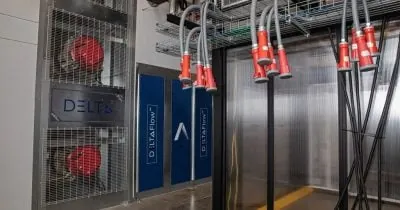
Jane Street, the quantitative trading firm, has documented the growth of its AI research lab from an initial six Dell boxes to a purpose-built liquid-cooled GPU data center. The transition reflects the computational scaling required to run increasingly complex machine learning models that support the firm's trading operations and research initiatives.
Resource Allocation Strategy
The infrastructure upgrade emphasizes Jane Street's approach to efficient resource allocation in compute-intensive environments. Liquid cooling systems are standard in high-density GPU deployments because they reduce energy consumption and operational costs compared to air cooling, particularly as GPU counts and power draw scale. The move signals the firm's willingness to invest capital in hardware infrastructure to support AI workload growth.
Implications for Quantitative Finance
The shift mirrors a broader industry trend in which trading firms and financial institutions are building proprietary AI infrastructure rather than relying solely on cloud providers. Jane Street's investment in dedicated hardware suggests confidence in the durability of machine learning's role in quantitative trading strategies, and the efficiency gains from liquid cooling reflect the competitive pressure to optimize cost-per-compute in an industry where margins depend on operational efficiency.
Why It Matters
For Traders
Jane Street's infrastructure investment signals continued confidence in systematic trading strategies, though the upgrade does not directly change market microstructure or spot prices.
For Investors
Quantitative trading firms' pivot toward proprietary GPU infrastructure rather than cloud services suggests long-term belief in AI-driven strategies and capital reallocation within fintech.
For Builders
Increased GPU infrastructure adoption by major trading firms may influence demand for liquid cooling hardware, CUDA-optimized frameworks, and GPU allocation tools in the broader tech stack.
This article is for information only and is not financial advice. Read the full disclaimer.