Japan Government Bond Yields Rise Amid Global Selloff
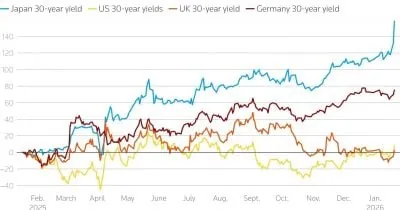
Japanese government bond yields climbed Tuesday as part of a broader global fixed-income selloff, with 10-year JGB yields reaching their highest level in months. Rising yields may trigger Japanese capital repatriation, potentially tightening financial conditions worldwide and affecting crypto market liquidity.
Written by CoinArticle’s AI Newsroom · from 1 cited source. How we work
Global Bond Market Pressure
Japanese government bond yields rose across the curve Tuesday, tracking a broader selloff in fixed-income markets. The move reflects increasing expectations for higher global interest rates and follows similar moves in U.S. Treasuries and European sovereigns over the past week.
Repatriation Risk and Crypto Implications
Rising JGB yields create incentives for Japanese investors to repatriate capital currently deployed in overseas assets, including lower-yielding global bonds. A large-scale repatriation flow could tighten dollar liquidity globally and increase yields on other fixed-income instruments, potentially redirecting capital away from risk assets including crypto. Japanese institutional investors and the Bank of Japan's yield-curve-control regime have historically anchored a substantial pool of global liquidity; shifts in that dynamic ripple across markets.
Market Timing Context
The timing coincides with renewed expectations around Federal Reserve policy and Bank of Japan tightening signals. Traders are watching whether the BoJ's continued tolerance for higher yields signals a shift in its accommodation stance, which would accelerate repatriation flows.
Why It Matters
For Traders
Capital repatriation from Japan could reduce global liquidity available for risk assets, compressing trading volume and increasing volatility in crypto spot and derivatives markets over days to weeks.
For Investors
A sustained shift in Japanese monetary policy stance signals a major pivot in global carry-trade dynamics, directly affecting stablecoin yields and multi-month funding rates across crypto venues.
For Builders
Tightening global liquidity may reduce TVL inflows to new protocols and limit stablecoin demand, while creating arbitrage opportunities for protocols that can efficiently access yen-denominated funding.
This article is for information only and is not financial advice. Read the full disclaimer.