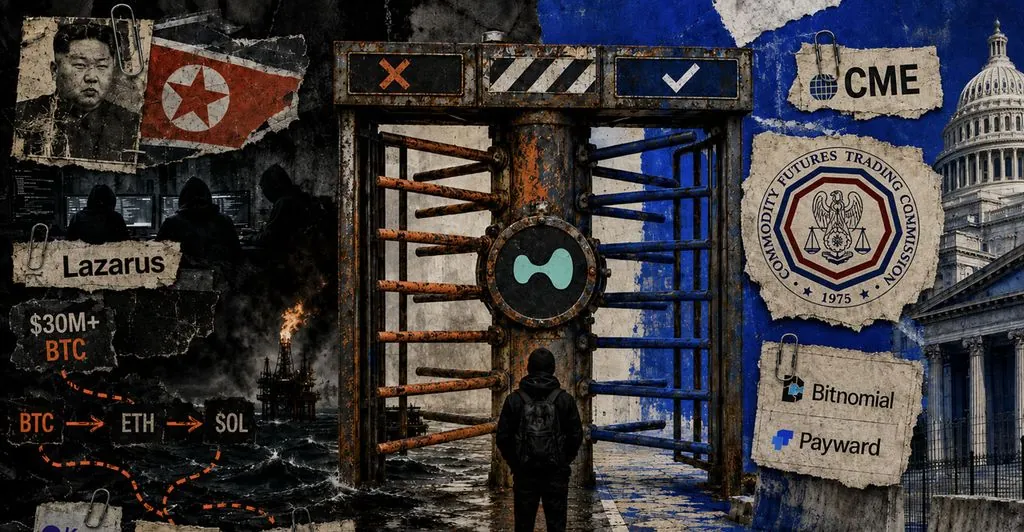
North Korea's Crypto Espionage Campaign Reshapes Security Threats
A six-month North Korean espionage campaign targeting cryptocurrency platforms has exposed critical vulnerabilities beyond technical security measures. The operation forces the crypto community to recognize that security threats now encompass social engineering, operational lapses, and state-sponsored intelligence gathering.
Written by CoinArticle’s AI Newsroom · from 1 cited source. How we work
Key Takeaways
- 1**Social engineering attacks**
- 2**Human psychology exploitation**
- 3**Operational security lapses**
- 4**Supply chain compromises**
- 5**Targeted intelligence gathering**
North Korea's 6-Month Crypto Espionage Campaign: How It's Reshaping Security
Understanding the Espionage Campaign
North Korea has orchestrated a sophisticated, six-month espionage operation targeting cryptocurrency platforms and community members. This coordinated state-sponsored campaign represents a significant escalation in cyber threats against the digital asset sector, revealing vulnerabilities that transcend traditional technical security measures.
The campaign's duration and precision demonstrate careful planning and substantial resource allocation, highlighting how seriously adversarial nation-states view the cryptocurrency industry as a strategic target. Rather than opportunistic hacking, this represents calculated intelligence gathering with far-reaching implications for individual traders, exchanges, and the entire crypto ecosystem.
Challenging Traditional Security Assumptions
The cryptocurrency industry has long operated under a core assumption: security problems are primarily technical problems. This paradigm held that audited code, battle-tested smart contracts, and robust infrastructure ensure platform security. Billions in capital flowed through systems built on this foundation.
The North Korean espionage program, combined with recent incidents like the Drift vulnerability, has fundamentally challenged this narrative. The Drift incident demonstrated that critical security breaches can originate entirely outside the codebase, forcing the crypto community to confront uncomfortable truths about modern security threats.
Expanding the Definition of Vulnerability
Security vulnerabilities now extend far beyond buggy code. Contemporary threats encompass:
- Social engineering attacks
- Human psychology exploitation
- Operational security lapses
- Supply chain compromises
- Targeted intelligence gathering
A perfectly audited smart contract provides minimal protection if private keys are compromised through espionage or operational procedures are infiltrated by hostile actors. This expanded threat model demands corresponding evolution in security frameworks.
The crypto community must now treat security as a simultaneous technical, operational, and human challenge.
Critical Implications
For Individual Traders
Traders face elevated personal security risks from espionage targeting community members directly. Essential precautions now include VPN usage, hardware wallet storage, limiting public disclosure of holdings, and comprehensive operational security awareness.
For Institutional Investors
Investors must evaluate cryptocurrency platforms beyond code quality and financial performance. Due diligence now requires assessing counterintelligence capabilities and operational security maturity. Platforms must demonstrate defenses against state-sponsored threats to merit institutional capital.
For Development Teams
Builders must integrate security awareness across all operational layers. This includes employee training, information compartmentalization, vendor relationship management, and continuous threat monitoring. Modern crypto security requires both software engineering expertise and security professional thinking.
The Path Forward
The North Korean espionage operation signals a maturation in threats facing cryptocurrency. As the industry responds to these state-sponsored campaigns, security practices will become increasingly sophisticated—and increasingly costly—across all segments of the ecosystem.
Entities: North Korea, Drift
Categories: Security, Cybercrime, Cryptocurrency
Why It Matters
For Traders
Personal operational security practices are now essential defenses against direct espionage targeting community members.
For Investors
Due diligence must expand to evaluate platforms' counterintelligence capabilities and defenses against state-sponsored threats.
For Builders
Development teams must integrate security awareness across all operational layers, combining software engineering with security professional expertise.
This article is for information only and is not financial advice. Read the full disclaimer.