Pi Network Marks First Year on Open Mainnet Since February 2024 Launch
Pi Network completed its first year on open mainnet in February 2025, having launched from closed testnet in February 2024. The network has since deployed smart contracts and released Protocol 23, though trading volume and adoption metrics remain limited compared to established Layer 1 blockchains.
Written by CoinArticle’s AI Newsroom · from 1 cited source. How we work
Mainnet Launch and Early Milestones
Pi Network transitioned to open mainnet in February 2024 after years of operation on closed testnet. The network began accepting transactions from its user base and gradually expanded validator participation. Protocol 23, released during this period, introduced updates to consensus mechanisms and network parameters, according to the project's development roadmap.
Smart Contracts and Ecosystem Development
Smart contract functionality went live on Pi mainnet during the first year, enabling developers to deploy decentralized applications on the network. The capability marks a shift from a payments-focused system toward a full blockchain platform, though adoption by third-party builders remains nascent. Public documentation of live smart contracts and their on-chain transaction volume is sparse.
Current State and Transparency Gaps
Pi Network's first mainnet year has coincided with limited public reporting on key metrics. Block explorers and on-chain analytics from established firms like Etherscan or Solscan have not covered Pi with the same granularity as other Layer 1 networks. The project publishes periodic updates through official channels, but independent verification of claims around validator count, transaction throughput, or security is difficult to obtain.
Why It Matters
For Traders
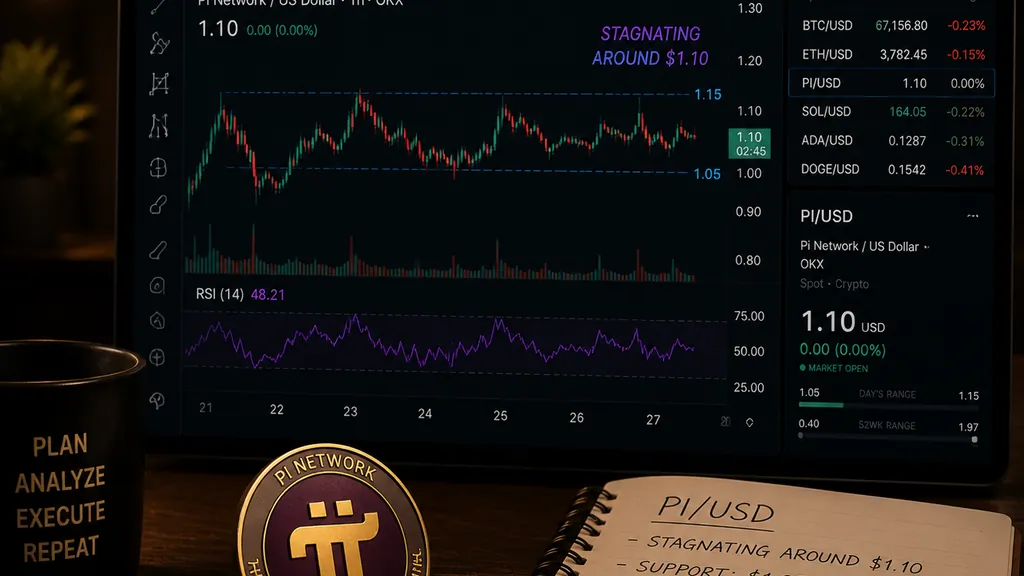
Pi remains illiquid on major exchanges with minimal spot trading pairs, limiting practical entry and exit routes for active traders.
For Investors
Smart contract capability expands Pi's addressable market from payments to general-purpose computation, though uptake signals remain weak.
For Builders
Pi now supports arbitrary contract deployment, but ecosystem tooling and developer adoption lag peers; builders should assess firsthand before committing resources.
This article is for information only and is not financial advice. Read the full disclaimer.