Political Rift Over Iran Policy Amid Market Uncertainty
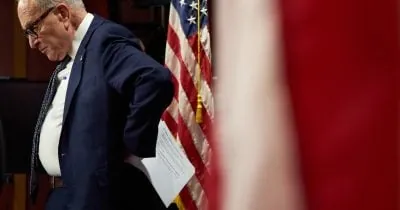
Senate Minority Leader Chuck Schumer criticized former President Trump's approach to Iran negotiations, calling it a surrender. The partisan disagreement signals ongoing U.S. political divisions that could affect market stability and diplomatic relations.
Written by CoinArticle’s AI Newsroom · from 1 cited source. How we work
Political Disagreement Over Iran Strategy
Senate Minority Leader Chuck Schumer voiced opposition to the Trump administration's handling of Iran relations, characterizing the approach as a capitulation rather than a negotiated agreement. Schumer's remarks reflect deepening partisan divisions within Congress over U.S. foreign policy, a dynamic that has historically introduced volatility into capital markets during periods of geopolitical tension.
Potential Market Implications
Geopolitical uncertainty, particularly involving nuclear-armed nations or major oil-producing regions, can trigger flight-to-safety flows in traditional markets and cryptocurrency. Energy prices and risk assets remain sensitive to escalation signals. The extent to which this political division translates into concrete policy changes, or remains confined to public statements, will determine near-term market impact.
Why It Matters
For Traders
Geopolitical tension can spike volatility in traditional markets, occasionally driving capital into crypto as a hedge; watch energy and equity futures for confirmation.
For Investors
Persistent U.S. political dysfunction around foreign policy increases long-term macro uncertainty and may support safe-haven asset demand if tensions escalate.
For Builders
No direct technical or protocol-level impact from political disagreement, though sustained geopolitical stress can affect adoption and regulatory sentiment globally.
This article is for information only and is not financial advice. Read the full disclaimer.