Tether Dominates Stablecoin Market as USDC Faces Safety Questions
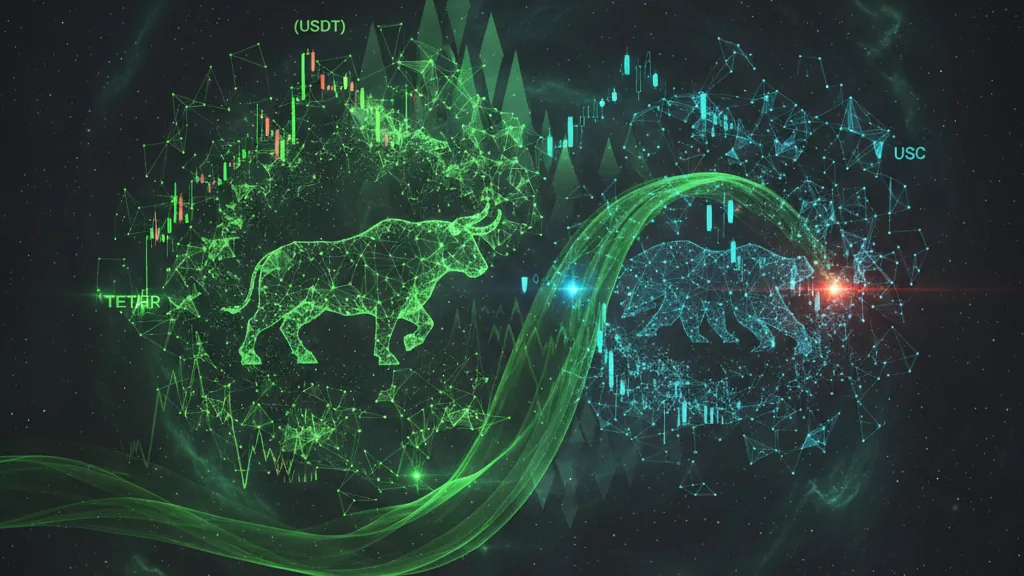
Tether (USDT) has expanded its market dominance to approximately 70% of the combined stablecoin market share with USDC, driven by superior liquidity and global accessibility despite renewed safety concerns. The divergence reflects a market preference for widespread adoption and accessibility over enhanced transparency mechanisms, raising questions about how regulatory frameworks will shape future stablecoin adoption.
Written by CoinArticle’s AI Newsroom · from 1 cited source. How we work
Tether Tightens Its Lead Over USDC as Stablecoin Safety Questions Return
Market Dominance Shifts Further Toward Tether
Tether (USDT) continues to expand its commanding lead in the stablecoin market, widening the gap between itself and USD Coin (USDC) amid renewed scrutiny over stablecoin safety and backing mechanisms. Recent market data shows USDT maintaining approximately 70% of the combined market share between the two largest dollar-pegged tokens, while USDC's position faces mounting competitive pressure.
The divergence reflects broader market preferences that have emerged despite ongoing regulatory uncertainty surrounding the crypto ecosystem. Tether's market capitalization has grown substantially over recent months, driven by consistent demand from trading platforms, decentralized finance (DeFi) protocols, and international remittance use cases where USDT maintains particularly strong adoption.
Safety Concerns Resurface in Market Consciousness
As Tether's dominance grows, questions about stablecoin safety have returned to the forefront of industry conversations. These concerns primarily focus on reserve composition, transparency mechanisms, and regulatory frameworks governing how stablecoins maintain their dollar peg. While Tether has conducted multiple attestation reviews and submitted to audits, historical questions about asset backing continue to influence market sentiment.
Conversely, USDC has positioned itself as offering enhanced transparency through regular attestation reports and robust governance structures via partnerships with regulated financial institutions. However, this regulatory rigor has not translated into significant market share gains for the Circle-backed stablecoin.
Regulatory and Trust Frameworks Create Market Divisions
The competitive dynamics between USDT and USDC highlight fundamental differences in how the two stablecoins approach regulatory compliance and institutional trust. Tether has built its market position through accessibility and adoption across emerging markets, while USDC has emphasized compliance-first positioning aimed at regulated financial institutions.
This divergence suggests the market may be valuing liquidity and accessibility over safety assurances in the current environment. The trend raises important questions about how regulatory frameworks will ultimately shape stablecoin adoption patterns.
Why It Matters
For Traders: Tether's liquidity advantages and widespread exchange listings make it the preferred trading pair, particularly for emerging market participants, while USDC's stronger regulatory positioning offers advantages during heightened scrutiny periods.
For Investors: Portfolio exposure to stablecoin risk varies significantly between assets. Institutional investors often favor USDC's transparency framework, while retail adoption strongly prefers Tether's accessibility and global presence.
For Builders: Developers must balance Tether's network effects against USDC's regulatory clarity when choosing integration partners, a decision that significantly impacts protocol viability across different geographic markets and institutional contexts.
This article is for information only and is not financial advice. Read the full disclaimer.