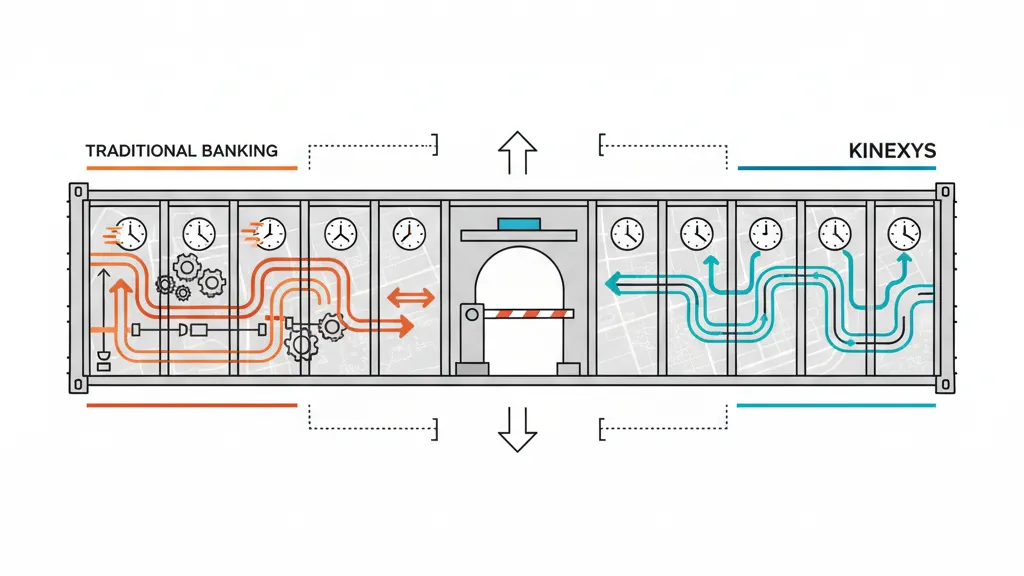
Tokenized Deposits: The Institutional Standard for On-Chain Cash
Major financial institutions including HSBC, Lloyds, and JPMorgan are adopting tokenized deposits on the Canton Network, signaling a decisive shift toward institutional blockchain infrastructure. Unlike stablecoins, tokenized deposits represent direct claims on bank reserves, eliminating bridge risk and providing regulatory clarity for on-chain financial operations.
Key Takeaways
- 1# Why Tokenized Deposits Are Becoming the Institutional Standard for On-Chain Cash ## The Institutional Shift to Tokenized Deposits Major global financial institutions are signaling a decisive move toward tokenized deposits as the preferred infrastructure for on-chain cash.
- 2HSBC, Lloyds, and JPMorgan have all committed to deploying tokenized deposit solutions on the Canton Network, marking a significant milestone in institutional blockchain adoption.
- 3This convergence of banking powerhouses represents more than isolated initiatives—it reflects an emerging consensus that tokenized deposits will form the backbone of institutional digital asset infrastructure.
- 4The Canton Network, developed by Digital Asset, provides the technical foundation enabling these institutions to issue and manage tokenized deposits with institutional-grade security and interoperability.
- 5According to Bernhard Elsner, Chief Product Officer at Digital Asset, the architecture is specifically designed to eliminate the friction and risks associated with traditional bridge solutions that have plagued cross-chain asset transfers.
Why Tokenized Deposits Are Becoming the Institutional Standard for On-Chain Cash
The Institutional Shift to Tokenized Deposits
Major global financial institutions are signaling a decisive move toward tokenized deposits as the preferred infrastructure for on-chain cash. HSBC, Lloyds, and JPMorgan have all committed to deploying tokenized deposit solutions on the Canton Network, marking a significant milestone in institutional blockchain adoption. This convergence of banking powerhouses represents more than isolated initiatives—it reflects an emerging consensus that tokenized deposits will form the backbone of institutional digital asset infrastructure.
The Canton Network, developed by Digital Asset, provides the technical foundation enabling these institutions to issue and manage tokenized deposits with institutional-grade security and interoperability. According to Bernhard Elsner, Chief Product Officer at Digital Asset, the architecture is specifically designed to eliminate the friction and risks associated with traditional bridge solutions that have plagued cross-chain asset transfers.
Key Distinctions: Tokenized Deposits vs. Stablecoins
A critical distinction separates tokenized deposits from consumer-facing stablecoins. Tokenized deposits represent direct claims on actual bank reserves, issued directly by regulated financial institutions. This structural difference provides institutional participants with regulatory clarity and counterparty certainty that algorithmic or collateral-backed stablecoins cannot match.
Tokenized deposits eliminate the abstraction layer inherent in stablecoin models. Rather than holding tokens backed by distant reserves, institutions gain direct exposure to bank liabilities—fundamentally altering the risk-return profile for on-chain financial operations.
Canton's Bridge-Free Architecture
The Canton Network's architecture represents a technical breakthrough by eliminating bridge risk entirely. Rather than relying on cross-chain messaging protocols vulnerable to hacks and exploits, Canton enables direct settlement between institutions on a shared ledger. This design reduces operational complexity while providing cryptographic certainty that has eluded multi-chain environments.
Why It Matters
For Traders
Tokenized deposits offer predictable on-chain liquidity from institutional sources. Without bridge risk, traders can confidently move capital between venues, reducing execution friction and improving capital efficiency in institutional-grade digital asset markets.
For Investors
The commitment from HSBC, Lloyds, and JPMorgan signals that institutional infrastructure is maturing. This adoption pattern typically precedes broad market growth, suggesting that tokenized deposit infrastructure will become fundamental to how financial markets operate on-chain.
For Builders
The standardization around Canton and tokenized deposits creates a clear protocol layer for application development. Builders can now confidently integrate institutional cash settlement into DeFi protocols, derivatives platforms, and enterprise applications without engineering around fragmented stablecoin ecosystems or unreliable bridges.
Conclusion
The institutional consensus forming around tokenized deposits represents infrastructure maturation rather than speculative innovation—a meaningful signal for digital asset markets entering their institutional phase.