Trump's Crypto Pardons Signal Shift in Washington's Digital Asset Policy
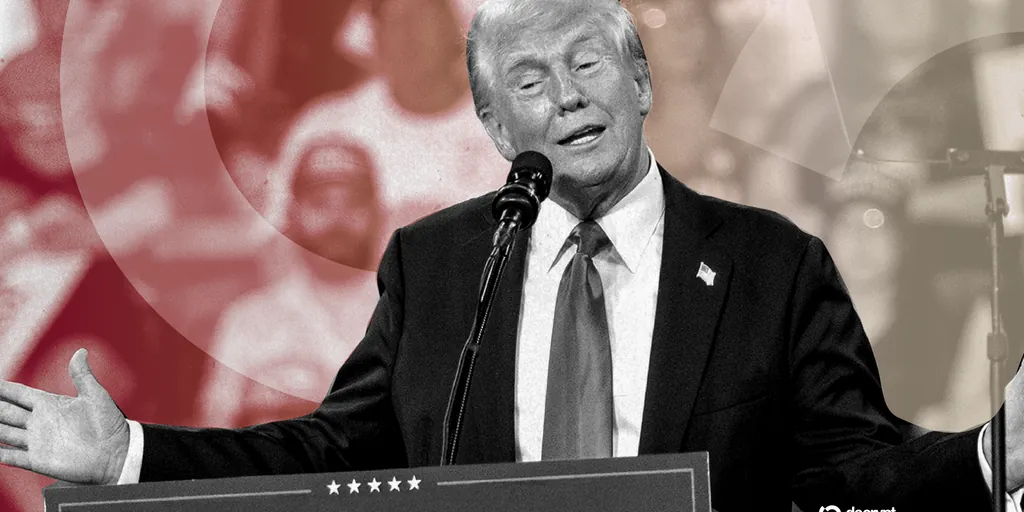
Former President Donald Trump has issued pardons to key figures in the cryptocurrency industry, marking a pivotal moment for digital assets in U.S. politics. These actions highlight crypto's growing political influence and its emergence as a divisive partisan issue.
Written by CoinArticle’s AI Newsroom · from 2 cited sources. How we work
Trump's Crypto Pardons Signal Shift in Washington's Digital Asset Policy
Former President Donald Trump has issued pardons to several prominent figures in the cryptocurrency industry, a move that underscores the growing political significance of digital assets and highlights the increasingly partisan nature of crypto policy in Washington. This development represents a watershed moment for an industry striving for legitimacy and regulatory clarity at the federal level.
What We Know
Multiple sources confirm that Trump has granted clemency to notable individuals within the cryptocurrency sector. These pardons are seen as a milestone, cementing cryptocurrency's status as both a significant economic force and a polarizing political issue in the nation's capital.
The decision marks a sharp departure from the enforcement-heavy stance that has characterized much of the federal government's recent approach to the crypto industry, particularly during regulatory crackdowns targeting platforms and executives.
Key Details
The timing of these pardons is critical for the cryptocurrency industry, which has faced mounting scrutiny from federal regulators in recent years. As the sector becomes increasingly politically active, significant campaign contributions have flowed to candidates perceived as crypto-friendly.
By granting these pardons, Trump has positioned himself as a strong ally of the digital asset sector, contrasting sharply with the regulatory enforcement strategies pursued under other administrations. This alignment reflects the industry's evolution from a niche technology to a major economic and political force capable of shaping policy debates at the highest levels of government.
The pardons also underscore the growing political divide over how digital assets should be regulated. While some lawmakers and officials advocate for stricter oversight and enforcement, others push for lighter-touch regulation to foster innovation and maintain global competitiveness.
Why This Matters
These pardons carry significant implications that extend far beyond the individuals who received clemency. First, they elevate cryptocurrency as a legitimate policy priority capable of influencing presidential decision-making, further embedding the industry into national political discourse.
Second, the pardons crystallize crypto's transformation into a partisan political issue. This polarization could lead to an unstable regulatory environment, with policy approaches shifting dramatically depending on which party holds power in the executive branch and regulatory agencies.
Third, the clemency actions send a clear message to the broader crypto community about the potential political protection available to industry figures who align with supportive policymakers. This could encourage continued growth and investment in the sector while raising questions about balancing innovation with the enforcement of financial regulations.
The pardons also reflect the cryptocurrency industry's growing lobbying power. With significant investments in political contributions and advocacy, the sector has demonstrated its ability to influence tangible political outcomes.
For the cryptocurrency sector, Trump's actions provide a measure of validation and suggest that political winds may shift toward more accommodative regulatory frameworks. However, the explicitly partisan nature of this support means that the industry's fortunes in Washington may increasingly hinge on election outcomes rather than bipartisan consensus.
As the 2024 election cycle gains momentum, these pardons are likely to shape how both political parties approach cryptocurrency regulation. Digital asset policy could emerge as a key differentiator between candidates and a litmus test for industry support, further entrenching crypto's role in the national political landscape.
Key entities: Donald Trump, Washington, Cryptocurrency
Sentiment: Neutral
This article is for information only and is not financial advice. Read the full disclaimer.