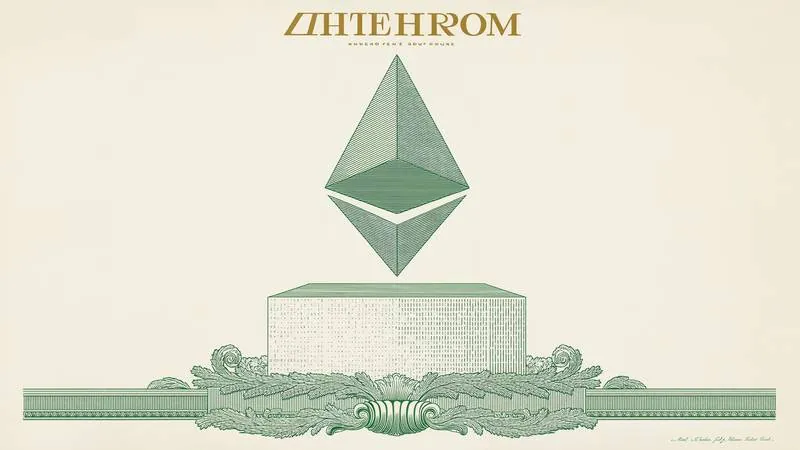
Vitalik Reframes Ethereum's Mission: CROPS Over Speed
Vitalik Buterin says Ethereum should prioritize censorship resistance, openness, privacy, and security—termed CROPS—rather than competing primarily on transaction speed. The shift reflects a strategic pivot away from throughput benchmarking toward core cypherpunk principles.
Written by CoinArticle’s AI Newsroom · from 1 cited source. How we work
Reframing Ethereum's Competition
Vitalik Buterin has called for Ethereum to abandon its focus on speed as a primary competitive metric, arguing instead that the network should emphasize what the Ethereum Foundation calls CROPS: censorship resistance, openness, privacy, and security. The four properties form the foundation of Buterin's updated vision for what distinguishes Ethereum in an increasingly crowded landscape of high-throughput blockchains.
The reframing represents a shift in how Ethereum measures success. Rather than racing other Layer 1 networks on transactions-per-second or comparing finality times, Buterin's formulation asks whether Ethereum can deliver the cypherpunk guarantees that justified its creation—that no single entity can censor transactions, that the protocol remains open to anyone, that user data stays private, and that the network resists attack.
The Bet on Values Over Metrics
Buterin's statement hinges on an assumption that remains untested at scale: whether users and applications will value those properties enough to justify trade-offs elsewhere. Speed-focused chains have attracted substantial transaction volume by optimizing for low latency and low fees, metrics that are easy to measure and market. Censorship resistance and privacy are harder to quantify, more abstract to end users, and typically require accepting higher costs or slower settlement.
The success of this strategic pivot ultimately depends on sustained demand for Ethereum's explicit cypherpunk guarantees. If developers and users prioritize performance benchmarks over protocol resilience, the CROPS framework will remain philosophically sound but commercially peripheral.
Why It Matters
For Traders
A strategic refocus from speed to principles may dampen near-term competitive momentum against faster L1s but could stabilize ETH's narrative valuation if the cypherpunk thesis gains institutional adoption.
For Investors
This articulates Ethereum's differentiation from throughput-optimized chains; success hinges on whether market demand for censorship resistance and privacy justifies slower performance relative to competitors.
For Builders
Projects on Ethereum should assess whether CROPS-aligned features—privacy layers, censorship monitoring, decentralized governance—become table-stakes for ecosystem dApps, potentially shifting product priorities.
This article is for information only and is not financial advice. Read the full disclaimer.