Bitcoin Falls Below $81,000 as Inflation Data and AI Selloff Intensify Pressure
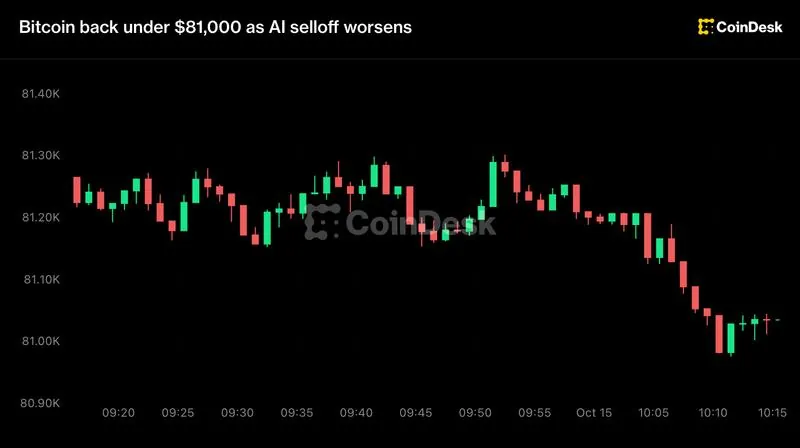
Bitcoin declined to below $81,000 following hotter-than-expected September inflation data and an accelerating selloff in AI stocks. The drop marks a retreat from earlier levels as macroeconomic headwinds weigh on risk assets.
Written by CoinArticle’s AI Newsroom · from 2 cited sources. How we work
Price Movement and Trigger
Bitcoin fell below $81,000, retreating from earlier levels around $86,000 as reported by CoinDesk. The decline coincided with September inflation data coming in above economist forecasts, signaling persistent price pressures that could influence Federal Reserve policy decisions in coming months.
Market Drivers
The selloff in AI-related equities accelerated concurrent with Bitcoin's decline, suggesting broad-based risk-off sentiment rippling across asset classes. Bitcoin and other cryptocurrencies often move inversely to broader equity weakness when investors reduce leverage and rotate toward cash or defensive positions. The combination of inflation concerns and equity market stress created a compounding effect on digital assets.
Market Context
The move brought Bitcoin back toward lows recorded the prior week, according to CoinDesk's reporting. The price action reflects investor unease around macroeconomic conditions rather than crypto-specific news, with participants reassessing exposure to higher-risk assets across multiple markets.
Why It Matters
For Traders
Bitcoin testing support near $81,000 with high macro sensitivity means traditional markets data now drives hourly or daily moves more than on-chain activity.
For Investors
Above-forecast inflation narrows the probability of near-term Fed rate cuts, which historically correlates with extended consolidation or downside in risk assets including Bitcoin.
For Builders
Periods of macro-driven selloff typically reduce new user onboarding and DeFi TVL; builders should monitor macro calendars for inflation, jobs, and Fed communications as leading indicators.
This article is for information only and is not financial advice. Read the full disclaimer.