Bitcoin Falls Below $63,000 on Iran Strikes, Trump's China Comments
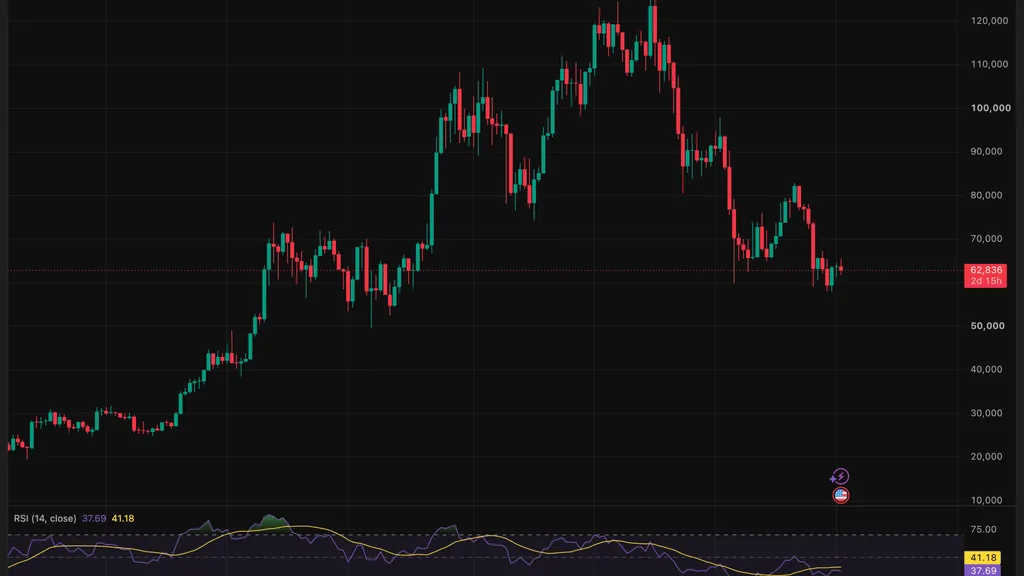
Bitcoin dropped below $63,000 Tuesday following U.S. airstrikes on Iran and renewed U.S.-China tensions, triggering roughly $1 billion in liquidations across crypto markets. On-chain data and ETF inflows suggest institutional buyers are absorbing the selloff.
Written by CoinArticle’s AI Newsroom · from 2 cited sources. How we work
Geopolitical Risk Sparks Liquidations
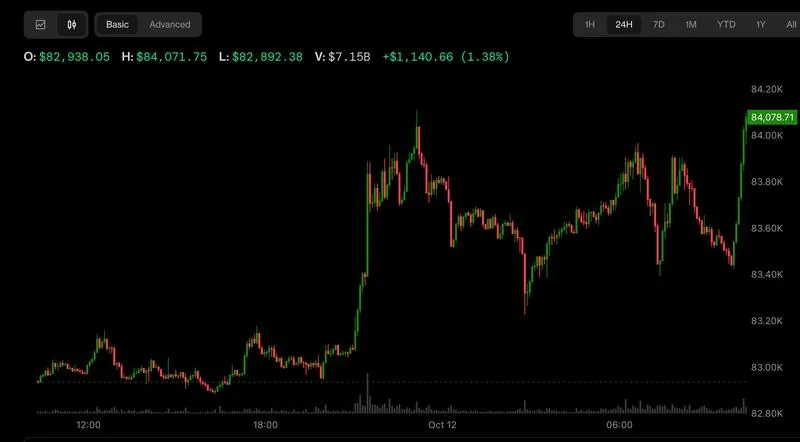
Bitcoin fell below $63,000 Tuesday as U.S. military action against Iran and escalating U.S.-China rhetoric drove a broader risk-off rotation across assets. The selloff resulted in approximately $1 billion in cryptocurrency liquidations, according to liquidation tracking data. The decline marks a pullback from recent price levels, though sources differ on the exact low: one reported Bitcoin fell below $60,000, while another cited a floor near $63,000.
On-Chain Data Suggests Support
Despite the sharp intraday move, on-chain metrics point to institutional accumulation. Bitcoin Magazine reported that exchange inflows data and renewed spot ETF purchases indicate buyers are stepping in at lower levels rather than capitulating. This divergence between price action and accumulation patterns is common during geopolitically driven selloffs, where leveraged traders exit positions while longer-horizon participants add exposure.
Traders are monitoring key support levels as volatility persists. The liquidation cascade, while substantial, remains modest relative to total market depth, suggesting the selloff may have exhausted much of its immediate momentum.
Why It Matters
For Traders
Bitcoin near support with large liquidations flushed; watch for resistance around $65,000 and continued geopolitical headline risk over next 24-48 hours.
For Investors
On-chain buyer participation during drawdowns historically signals institutional confidence; accumulation during volatility can precede multi-week rallies.
For Builders
Exchange inflow patterns affect liquidity conditions for dApp transactions and cross-chain bridges; monitor slippage metrics if volatility persists through week.
This article is for information only and is not financial advice. Read the full disclaimer.